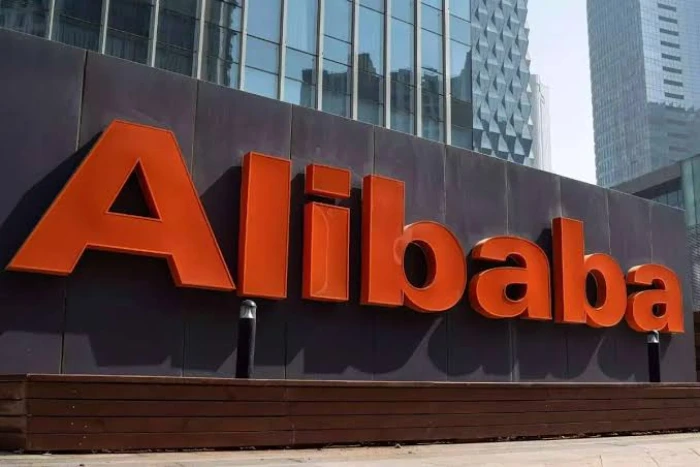
Alibaba priced a HK$80 billion ($10.2 billion) share sale in Hong Kong on Monday to bankroll its artificial intelligence expansion, and investors marked the stock down sharply even as the offering pulled in far more demand than the company set out to raise.
The e-commerce and cloud group sold 710 million new shares at HK$112.70 each, an 8.4% discount to Friday's close. Its Hong Kong-listed stock fell as much as 10.5% during the session before paring losses in the afternoon to trade closer to the placement price. The sale ranks as the largest primary follow-on offering ever by a Hong Kong-listed company.
The reaction laid bare a split now shaping how markets read Alibaba: conviction in the AI story on one side, unease about near-term dilution and execution on the other.
A record raise that drew triple the demand
The order book reached roughly $28 billion, about three times the size of the deal, according to people with knowledge of the process. Around $6 billion of that came from long-only funds and sovereign investors. Close to 40% of the shares were allocated to those longer-horizon buyers, a group that included major sovereign wealth funds stretching from the Gulf to Europe to Asia.
Named participants included the Qatar Investment Authority, Norway's Norges wealth fund, and the investment firm Hillhouse, according to one person familiar with the allocation. Alibaba and the three investors did not immediately comment.
Two of Alibaba's most senior figures put personal money into the deal on the same day.
Chairman Joe Tsai bought 720,000 Hong Kong shares at an average of HK$112, spending about HK$80 million, while chief executive Eddie Wu purchased 350,000 shares at roughly HK$111.60, or about HK$40 million, based on the group's stock exchange disclosures released later on Monday. The purchases sit near the placement price and read as a confidence signal to a market that had just discounted the stock. The offering was structured as an offshore transaction outside US securities law, so American investors could not take part.
Where the money goes
Alibaba said it would direct all net proceeds toward its full-stack AI ambitions. The money is meant to cover the whole chain, from silicon design through data-center buildout to the Qwen models Alibaba trains and the software it runs on top of them.
The plan lands a week after Alibaba reported a 75% drop in quarterly net profit, a decline the company tied mainly to its AI spending. On that earnings call, management said it had already committed close to half of a three-year capital budget of 380 billion yuan (about $56.5 billion). Wu told analysts the company expects those AI investments to break even inside three years, and possibly in as little as 2.5, as margins improve and Alibaba swaps in its own chips for hardware bought from outside suppliers. The company has described the returns on that computing spend as carrying a high degree of certainty, language that sits at odds with the caution in the share price.
Splitting AI from the cloud
Alibaba reorganized this year to place its AI operations in a standalone unit under Wu, separating them from the cloud business.
The move signals how central the technology has become to the group. Beyond selling AI services to companies operating in China, Alibaba is preparing to list its chip design arm, T-Head, and building AI agents that reach across its shopping, delivery, travel, and entertainment platforms. The company has also helped train a large language model that Apple plans to offer in the Chinese market, part of Apple's effort to bring AI features to iPhones sold there.
Its Qwen models rank among the most widely used in China, and the family has become a reference point for open-weight AI well beyond the country's borders.
The gap with US spending
For all the scale of Monday's raise, Chinese AI budgets remain small next to American ones.
Capital Group put combined AI capital spending by the largest US hyperscalers, Microsoft, Amazon, Alphabet, Meta, and Oracle, at $791 billion as of July 31. The equivalent figure for China's four biggest players, ByteDance, Alibaba, Tencent, and Baidu, came to $118 billion, a fraction of the US total.
That divide traces partly to US export controls, which have kept Nvidia's most advanced chips out of Chinese data centers. The constraint has pushed firms in China to design leaner models and infrastructure that squeeze more work out of less computing power. The industry has not settled whether that ends up a lasting handicap or an accidental edge.
Same playbook, different financing
Alibaba's placement arrived in the same stretch as enormous capital raises in the US.
The offering ranks as the third-largest primary follow-on share sale anywhere this year, trailing only a nearly $85 billion raise from Alphabet and a $20 billion one from Intel. Winston Ma, an adjunct professor at NYU School of Law and a former China Investment Corporation executive, read the timing as evidence that American and Chinese technology giants are working from the same strategic script. He also argued that global sovereign investors are treating US-China tech friction as something to manage rather than avoid, growing more comfortable backing Chinese commercial cloud and open-weight AI ventures than restricted semiconductor hardware.
The methods diverge across the two markets. Much of the global AI buildout has been funded through heavy borrowing, an approach that has begun to strain investor appetite. SoftBank illustrated the debt route on the same Monday, announcing a $6.3 billion retail bond sale, its biggest to date. Alibaba, by contrast, reached for equity.
The skeptics
Not every investor is convinced the money will translate into a lead.
"Alibaba's DNA is in e-commerce, not advanced tech," said Yang Tingwu, vice general manager at asset manager Tongheng Investment, who argued the company risks being outmaneuvered on innovation no matter how much it commits to AI hardware.
The dilution math gives that caution a concrete edge. The new shares equal about 3.6% of Alibaba's enlarged share count, and a discounted placement of this size tends to pull a stock toward the deal price until the market absorbs the added supply. The heavy allocation to long-only and sovereign holders, buyers who tend to sit tight rather than flip, is meant to soften that effect.
For Wu, the bet rests on a longer clock. His pitch to analysts leans on the idea that owning more of the AI stack, the chips above all, will lift margins as Alibaba's own silicon displaces bought-in hardware, and that the payback window keeps narrowing as demand for AI computing climbs.



Comments 0
Join the discussion and share your perspective.
Sign in to post a comment and reply to other readers.
No comments yet
Be the first to share your perspective on this article.