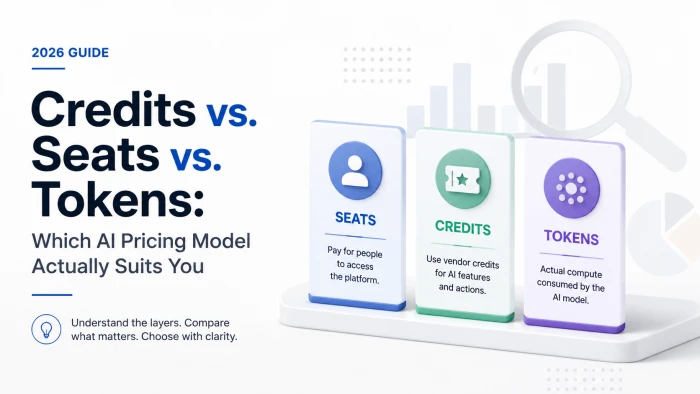
Quick Simmary Credits, seats, and tokens are not three competing choices. They sit on three different layers of the same bill, and most AI products stack all three. The right one for you depends on four things: how many people use the tool, how often, how evenly the usage spreads across your team, and whether a predictable invoice matters more than the lowest possible one. Read the layer underneath the label before you sign anything. |
|---|
A customer-support team I heard about ran a trial of an AI tool built on a foundation-model API. The trial month cost about $300. By month twelve the same tool billed roughly $14,000, after a single feature launch pushed conversation volume up 40 times in two weeks. Nothing about the pricing page had changed. The usage had.
That gap is the whole problem with AI pricing. The label on the button (a seat, a credit, a token) tells you almost nothing about what you will actually pay once real usage arrives. Every provider invents its own vocabulary, so two tools that look priced the same can produce wildly different invoices. Comparing them feels like reading a code you were never given the key to.
This guide hands you the key. First, why the three units confuse everyone. Then a simple model that finally makes them comparable. After that, how each one behaves, real 2026 examples of each, and a short set of questions that point you to the model that suits your situation.
Why AI pricing feels impossible to compare
The old software assumption that AI broke
Traditional software had marginal costs near zero. Once the product was built, serving customer 10,001 cost about the same as serving customer 10,000, so a flat monthly fee worked and nobody thought hard about it. AI removed that floor. Every request now carries a real, metered compute cost, and that cost can vary by orders of magnitude between a light user and someone running agents in the background. A flat fee that made sense for a human typing all day does not make sense for a workload that never sleeps.
The real question hiding under every model
So the true question behind seats, credits, and tokens is not which word customers understand best. It is who absorbs the swings when usage or model prices move. Each unit answers that differently, and each answer sends the risk toward either you or the vendor. Hold onto that idea, because it is the thread running through everything below.
The layer model: these three units are not the same kind of thing
Here is the mistake almost every comparison makes. It lines up seats, credits, and tokens as if you pick one from a menu. You rarely do. They operate at different depths of the same product, and a single plan often uses all three at once.
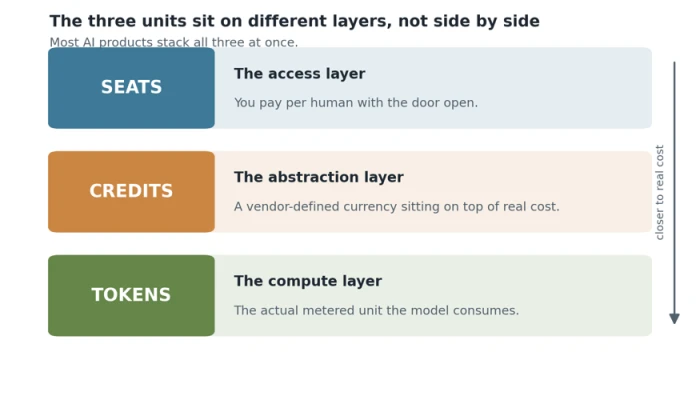
A seat is an access license. You pay for a person to have the door open, whether they walk through it once or a thousand times. A token is the unit the model actually consumes: fragments of text going in and coming out, metered by the underlying provider. A credit sits in between as an abstraction. It is a currency the vendor invents and prices, redeemable against actions that ultimately burn tokens underneath.
Once you see the layers, a typical AI plan stops looking mysterious. You are charged a seat for access, handed a monthly credit allowance for the AI features, and those credits quietly draw down tokens on the model behind the scenes. The pricing page shows you the top layer. Your bill is decided by the bottom one. The next three sections take each layer in turn.
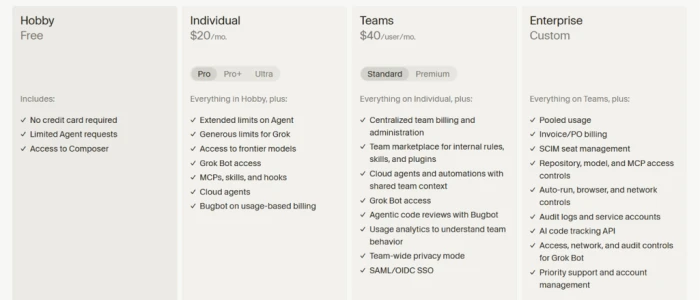
Per-seat pricing: predictable until one seat runs an agent
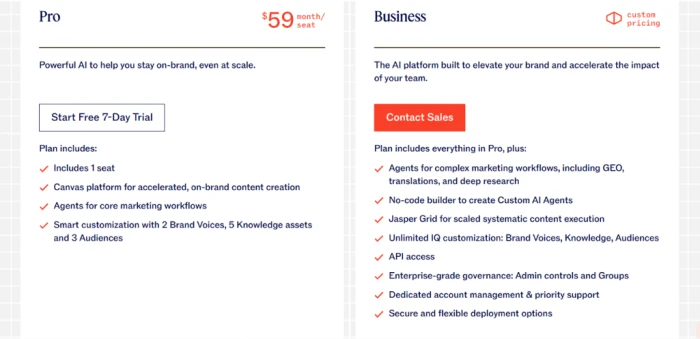
Per-seat is the model your finance team already trusts. One price per user per month, approved in a single meeting, revenue and budget both scaling cleanly with headcount. That predictability is exactly why it spread, and it still fits real situations.
Where seats still make sense
● Usage is genuinely bounded by human attention, so no single account can run away with your compute.
● The AI feature is a small slice of the product, and its variable cost stays minor next to the flat fee.
● Usage across accounts is fairly even, so nobody is quietly subsidising anybody else.
Where seats break in the agent era
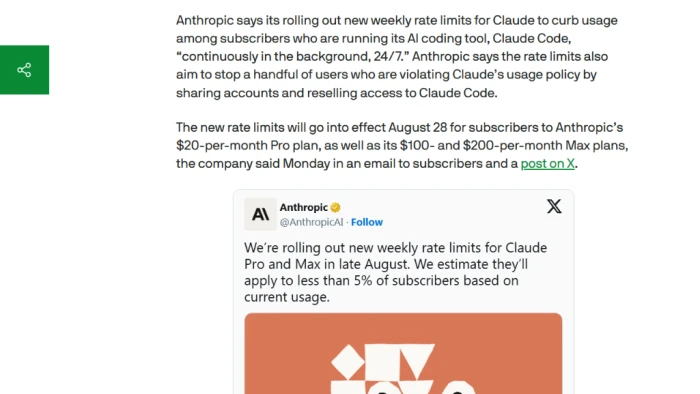
A seat used to be capped by one person at one keyboard. Agents removed that ceiling. One subscriber can now kick off background jobs that run around the clock, and a flat fee priced for a human ends up funding a fleet. The clearest signal came from the model makers themselves. In July 2025, Anthropic added weekly rate limits to its paid Claude plans after a small group of subscribers ran Claude Code, in the company's words, "continuously in the background, 24/7." It estimated the caps would touch fewer than 5% of subscribers, and that sliver was consuming compute no seat price had planned for.
When the company selling the underlying model has to cap its own flat plans, treat it as a warning about your own. On any usage pattern where a few accounts dominate, per-seat pricing turns into a subsidy: your lightest users quietly fund your heaviest.
If you're buying Ask what happens when one person automates. Is there a fair-use cap, and where is it? A seat price with no usage guardrail is a bet that none of your team will ever point an agent at it. |
|---|
Token-based pricing: honest math, hard to budget
What a token actually is
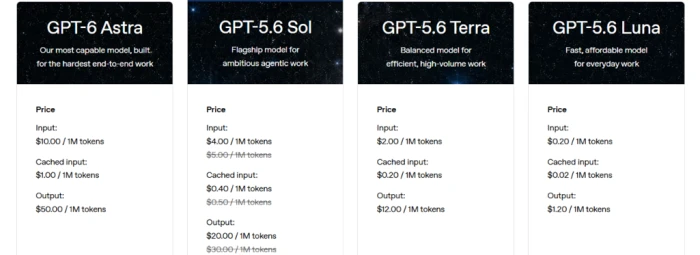
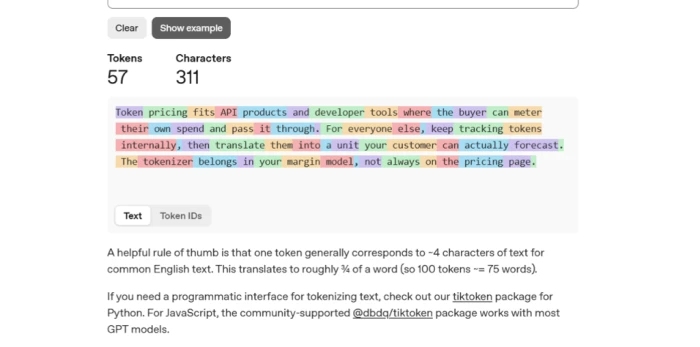
A token is a chunk of text, very roughly a few characters. Models bill separately for input tokens (your prompt plus any context you feed in) and output tokens (what the model writes back), and output usually costs several times more than input. Long documents, big context windows, and chatty agent loops all inflate the count. This is the layer where cost is most honest: revenue tracks consumption almost exactly, and nobody gets subsidised.
Why your bill moves even when you don't
The catch is volatility, in both directions. Model prices swing on the provider's schedule, not yours. Andreessen Horowitz has tracked the cost of equivalent-quality inference falling by about 10 times per year, and in mid-2025 OpenAI cut its o3 API price by 80% in a single announcement. Good news, until you realise reasoning models push the other way, spending far more output tokens per task than the models they replace. Your cost of goods behaves like a market, which is fine for a technical buyer watching a dashboard and painful for a procurement lead who wanted one number for the year.
If you're building Token pricing fits API products and developer tools where the buyer can meter their own spend and pass it through. For everyone else, keep tracking tokens internally, then translate them into a unit your customer can actually forecast. The tokenizer belongs in your margin model, not always on the pricing page. |
|---|
Credit-based pricing: convenient on the page, tricky underneath
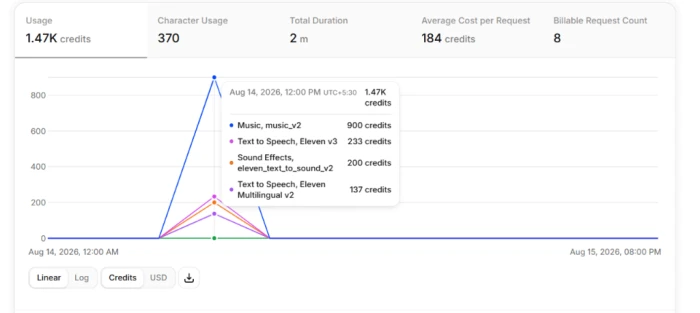
Credits try to give both sides what they want. The customer prepays for a tidy bundle, which hands procurement its predictable number. The vendor meters redemption against real actions, which keeps cost tracked. On the pricing page it looks like the best of the seat world and the token world combined. Underneath, it hides some sharp edges.
What actually burns a credit
A credit is not a fixed quantity of anything. It is a unit the vendor defines, and different actions drain it at different rates. One AI analysis might cost ten credits while a simple lookup costs one, because they cost the vendor different amounts to serve. If you check only one thing before signing a credit-based plan, check what burns a credit and how fast.
Conversion, rollover, and expiry
● Credit-to-token conversion can hide the real cost. A credit maps to some amount of tokens behind the scenes, and that mapping is the vendor's to set.
● Rollover and expiry decide whether unused credits carry over or vanish at the end of the cycle. Many monthly allowances reset to zero; purchased top-up packs sometimes last longer.
● Overage rates for extra credits are often higher than the rate inside your plan, and that number is rarely printed on the pricing page.
The quiet devaluation risk
Because a credit's price is fixed on the day the page is published while the vendor's underlying cost keeps moving, the spread between them can compress. When it does, the vendor has three moves: raise the credit price, absorb the loss, or quietly change how much a credit buys. Customers notice the third one, and they price the vendor's trustworthiness accordingly. Watch for it at renewal.
If you're buying Treat a credit balance like foreign currency you cannot spend anywhere else. Confirm the burn rate per action, the overage price, and whether unused credits expire, all before the contract is papered. |
|---|
Hybrid and outcome-based pricing: where the market is heading
Hybrid is now the default
Most mature AI products have converged on a hybrid: a base subscription that includes an allowance, with metered usage or credit top-ups beyond it. The seat gives the buyer a budgetable floor. The meter keeps heavy users from being subsidised. The numbers back the shift.
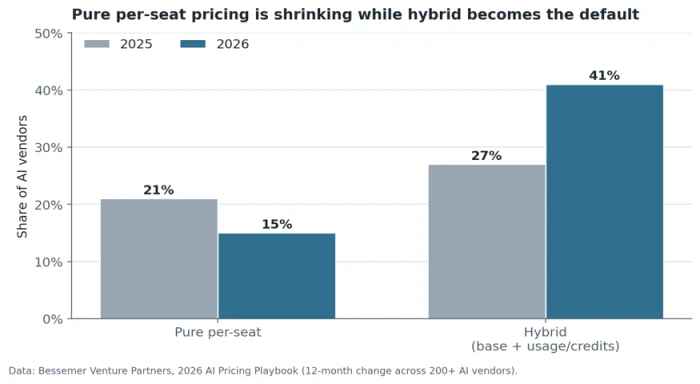
According to Bessemer Venture Partners' 2026 AI Pricing Playbook, tracked across more than 200 AI vendors, hybrid pricing rose from 27% to 41% adoption in twelve months while pure per-seat fell from 21% to 15%. The strategic tension inside a hybrid is not the packaging. It is the included allowance. Copy a competitor's allowance and you import their cost curve without their data. Set it to cover your heaviest users and you have rebuilt per-seat pricing with extra steps. Set it at the median and half your accounts blow through it mid-cycle. The allowance has to come from your own usage, and it has to be reviewed as models and workflows change.
Outcome-based pricing, the fast riser
The newest layer charges only when the AI delivers a result: a resolved ticket, a qualified lead, a drafted document. Intercom's Fin agent bills $0.99 per resolution, a model clean enough that revenue lines up with the metric customers already track. Gartner expects 40% of enterprise SaaS to include outcome-based components by 2026, up from about 15% two years earlier. The catch is measurement. Outcome pricing only works when "success" can be audited without an argument, which is why it shows up first in support and sales, where a resolution or a booked meeting is easy to count.
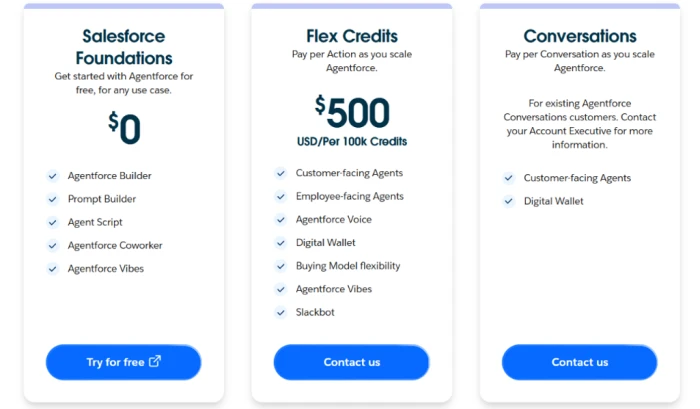
Real example Salesforce Agentforce lets buyers pick the layer that fits: Flex Credits at roughly $0.10 per action, a flat $2 per conversation, or about $125 per user per month for unlimited access. One product, three units, chosen by usage pattern. That is the layer model made literal on a single pricing page. |
|---|
The same team, priced three ways
Trade-offs get real when you put numbers on them. Take a fictional eight-person team that runs a mix of AI tasks, and price one month of the same work under each model. The figures below are illustrative, chosen to show the shape of each bill rather than any single vendor's rate.
| Scenario | Per-seat | Credits | Per-token |
|---|---|---|---|
| Light month (low, even usage) | $400 flat (8 x $50). You pay for seats that barely get used. | ~$180 spent against a prepaid bundle; the rest may expire. | ~$120 metered. Cheapest, because you only pay for what ran. |
| Heavy month (one power user) | $400 flat. The bargain of the three; the power user is subsidised. | Bundle burns out mid-month; top-ups at a higher overage rate. | Bill spikes with the workload. Honest, but hard to forecast. |
| Budget certainty | Highest. Same invoice every month. | Medium. Predictable until you hit overage. | Lowest. The invoice follows the meter. |
The pattern is consistent. Per-seat wins for steady, even teams and quietly overcharges spiky ones. Token pricing is cheapest when usage is low and scariest when it spikes. Credits smooth the bill until the allowance runs out, then behave like tokens with a worse rate. No model is cheapest everywhere, which is the entire reason the choice depends on you.
How to choose: four questions
The decision comes down less to the four units than to four facts about your own situation. Answer these honestly and the field narrows fast.
1. How many people use it, and how often?
A handful of people running occasional tasks rarely justify per-seat minimums; usage or credits fit better. Several people using it steadily every week is exactly where seats earn their keep.
2. How evenly does usage spread across the team?
Pull your actual usage and look at the shape, not the average. If a small group drives most of the consumption, every flat structure you buy is subsidising them, and the subsidy grows as agent use spreads. Skewed usage points to a metered model. Tight, even usage puts seats back in play.
3. Do you need a predictable bill more than the lowest bill?
A finance team defending an annual line item often values a steady invoice over squeezing out the last dollar. If that is you, lean toward seats or a hybrid with a firm allowance. If you can tolerate a variable bill in exchange for paying only for real use, usage pricing rewards you.
4. How technical is the person who owns it?
A developer with a spend dashboard tolerates a token meter and can pass the cost through. A non-technical owner who has never counted a token needs credits or seats, where the unit maps to something they already understand.
Think in cost shape, not trial price
As the opening story showed, the most expensive mistake buyers make is picking a tool on the trial-month price rather than the cost at real scale. The pricing model sets the shape of that cost: flat, linear, stepped, or something steeper. Two plans that look identical in month one can diverge by an order of magnitude by month twelve.
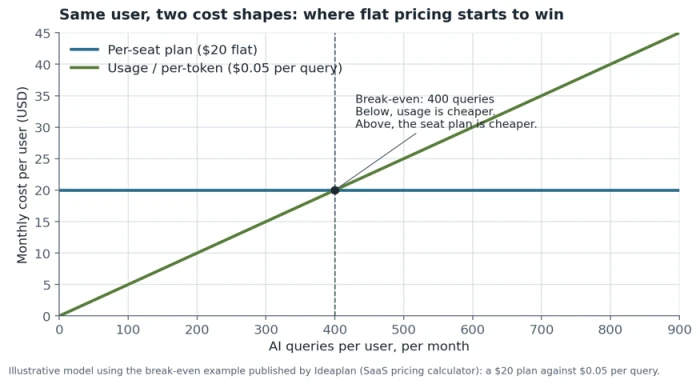
The math behind the crossover is worth running for yourself. Ideaplan's SaaS pricing example puts it simply: divide the plan price by the cost per action to find your break-even. A $20 plan against a $0.05 cost per query breaks even at 400 queries a month. Below that, usage pricing is the bargain. Above it, the flat seat plan is. Do this once with your own projected volume and the right model often becomes obvious, well before a sales call can talk you out of it.
Before you sign: the pricing-page checklist
A published price is a starting point, not a forecast. The number that decides your annual cost usually lives in the fine print. Run through this before you commit:
● What burns a credit or a token, and how fast, for the actions your team actually performs.
● The overage rate once the included allowance runs out, which is frequently higher than the in-plan rate and often omitted from the page.
● Rollover and expiry rules for anything unused at the end of a cycle.
● Usage caps or fair-use limits on seat plans, and where exactly they bite.
● Repricing rights, meaning what the vendor can change mid-contract and with how much notice.
● What "AI included" actually covers, since many plans bundle basic features into the seat but gate agents and actions behind a second meter.
The bottom line: match the model to your usage
Come back to the layers one last time. Seats sell access, credits sell a vendor-defined currency, and tokens meter the compute underneath, and the question that decides between them is who carries the volatility when usage or model prices move. Read that layer before the label, and the pricing page stops looking like a code.
If your team is small and steady, seats are still the simplest honest choice. If usage is spiky or low, a metered or credit model stops you paying for idle access. If the owner is technical and can pass cost through, tokens give you the most honest math. And if you need a floor you can budget with room to scale on top, the hybrid that now dominates the market exists for exactly that reason. The model that suits you is the one whose cost shape matches the way your team actually works, not the one with the friendliest word on the button.



Comments 0
Join the discussion and share your perspective.
Sign in to post a comment and reply to other readers.
No comments yet
Be the first to share your perspective on this article.