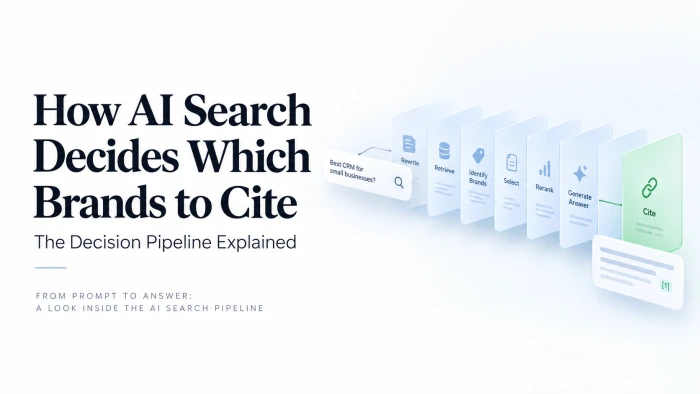
| AI search does not rank brands the way Google ranks pages. It runs each question through a pipeline: it rewrites the query, retrieves candidate passages, works out which brand is which, selects the most useful chunks, reranks them, writes an answer, and decides what to attribute. A brand can drop out at any stage. The one that wins is the brand whose evidence is easiest for the machine to find, verify, connect, and lift word-for-word. |
|---|
A founder types their own product category into ChatGPT and expects to see their company. Two competitors show up instead. The reflex is to check the Google ranking, find it is fine, and get confused. For more than a decade, ranking on Google was the visibility metric that mattered. That single number no longer predicts whether an AI engine will name you.
The data behind that gap is stark. An Ahrefs analysis of 863,000 search pages found that only 38% of Google AI Overview citations came from the top-10 organic results in early 2026, down from 76% roughly a year earlier. Being on page one is now weakly connected to being in the answer. To understand why, you have to stop thinking about ranking factors and start thinking about a sequence of decisions.
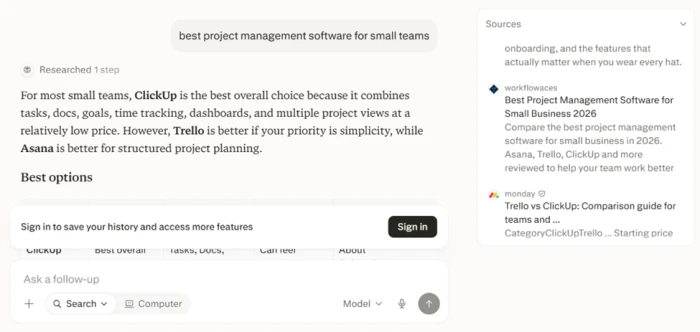
Three words people confuse: mentioned, cited, recommended
Before anything else, untangle three words that get used interchangeably and shouldn’t be. They describe different events, and each one is influenced by different work.
A mention names your brand in the prose
“If you want a CRM, look at HubSpot, Salesforce, or Pipedrive” contains three mentions and zero links. Mentions come mostly from what the model already learned during training, reinforced by how often your brand appears alongside your category across the web.
A citation attaches a source
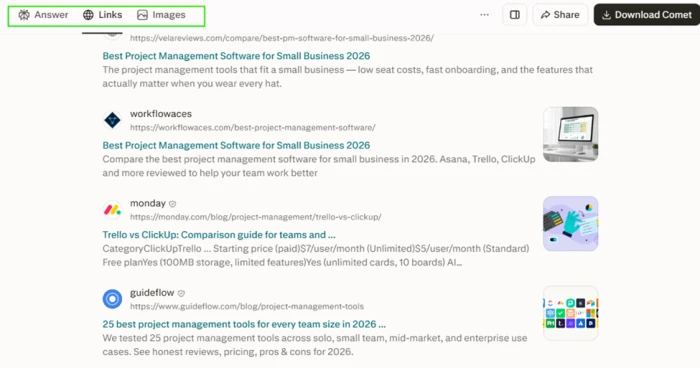
A citation is a clickable reference or an attribution like “according to …” with a link. Citations are the URLs the engine is willing to send a user to. A page can be cited without your brand being named, and your brand can be named without any of your pages being cited.
A recommendation answers a buying question
When someone asks for the best option in a category and the model returns a short list, that is a recommendation. It usually draws on both training-time associations and live third-party proof such as reviews and comparison pages.
Why does the distinction matter? Because the work that earns each one is different, and the strongest single predictor of visibility rewards mentions, not links. An Ahrefs correlation study of branded signals found branded web mentions tracked AI visibility at roughly 0.664, while domain-level backlinks sat near 0.218.
| Mention | Citation | Recommendation | |
|---|---|---|---|
| What it is | Brand named in the answer text | A linked, attributed source | Brand offered as an answer to a buying query |
| Mostly driven by | Training-time co-occurrence, third-party discussion | Extractable, structured on-page content | Reviews, comparisons, category coverage |
| What it builds | Entity identity in the model | URL-level source trust | Purchase-stage visibility |
| You influence it by | Being discussed consistently across the web | Writing standalone, liftable passages | Earning third-party proof in your category |
Hold that taxonomy in mind, because the pipeline decides all three at different stages. The next step is to walk that pipeline end to end.
The AI citation pipeline: what happens between a prompt and an answer
Most search engines that read live web content use retrieval-augmented generation, or RAG. The system turns the query into a numeric representation, searches an index for passages that sit close to it in meaning, filters and reorders the candidates, then writes an answer and attaches sources. Described as a list of factors, that sounds abstract. Described as a sequence, it becomes a map of exactly where you can win or lose.
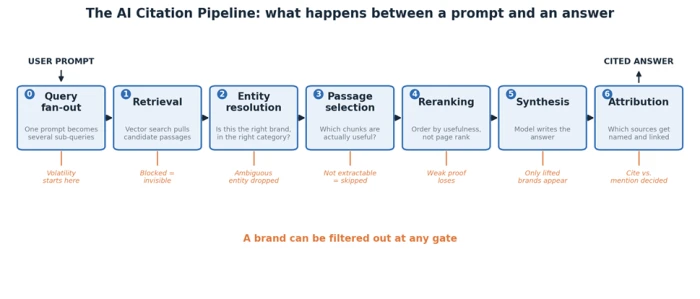
Figure 1. The seven stages between a user prompt and a cited answer. Original diagram; mechanism informed by published RAG retrieval and reranking research.
Stage 0 and 1: fan-out and retrieval
A single question is often expanded into several sub-queries, each sent to the index separately. That fan-out is where inconsistency is born: two runs of the same prompt can pull different passages. Retrieval itself is a similarity search, so if your pages are blocked to AI crawlers or too messy to parse, you never enter the candidate pool. You cannot be selected from a set you were never in.
Stage 2: entity resolution, the quiet killer
Here the system decides whether the thing it retrieved is actually your brand, and whether your brand belongs to the category in the question. This is where most brands fail. Consider a made-up but typical case: a company describes itself as a “marketing automation platform” on its own site, an “email marketing tool” on Crunchbase, and a “CRM” on a review site. A human reconciles those instantly. A model reads three conflicting signals and hesitates, then reaches for a competitor it can pin down.
Stage 3 and 4: passage selection and reranking
Retrieval ranks by relevance. RAG systems increasingly select by usefulness, choosing the smallest set of passages that actually answers the question rather than a fixed top-10. Recent retrieval research describes this shift from ranking to dynamic passage selection directly. The practical consequence: a self-contained paragraph that states a fact cleanly beats a longer, more authoritative page whose answer is buried in paragraph four.
Stage 5 and 6: synthesis and attribution
Finally the model composes the answer and decides which sources to name. A brand only appears here if its evidence survived every earlier gate. This is also where the citation-versus-mention split gets resolved: the model may lift a statistic from your page, mention a competitor by name, and cite a third site entirely.
| The takeaway from the pipeline: publishing more content does not move you forward if you fail at retrieval or entity resolution. The brands that get cited are the ones that are easiest for the machine to find, identify, and quote. |
Two ways your brand gets picked: memory versus live search
The pipeline above describes live retrieval. Sometimes the model answers from memory instead, using associations baked in during training. The difference decides how fast your work pays off.
• Answering from memory. The model leans on patterns it learned: which brands co-occur with which categories, and what a knowledge graph says about you. New coverage helps here only slowly, as it accumulates and eventually informs future training.
• Answering from live search. The model retrieves current pages in real time. Fresh third-party coverage and well-structured pages can start influencing answers within days, especially on retrieval-heavy engines.
This is why Perplexity, which retrieves aggressively, reflects new content quickly, while a training-heavy answer changes on a slower clock. If you need movement this quarter, prioritize the engines and tactics tied to live retrieval.
The five gates a brand must pass to get cited
The pipeline has many stages, but you only need to manage five conditions. Think of them as gates. Fail one and the rest do not matter, so they are worth fixing in order.
1. Retrievability. Can AI crawlers reach and parse your pages? Check that you are not blocking agents such as OAI-SearchBot or GPTBot, and that content is not locked behind scripts.
2. Entity clarity. Does every important profile describe you the same way? Align your own site, your Wikidata entry, your Crunchbase page, and your review-site listings on one category and one name.
3. Extractability. Can a single section be understood on its own? Lead with a direct answer, then support it. Narrative that only makes sense in context gets skipped.
4. Corroboration. Do independent sources back you up? Reviews and comparison pages are the proof the model trusts most, alongside genuine community discussion.
5. Freshness and fit. Is the information current and matched to the exact question? Stale numbers lose citations you already had.
Gate two deserves the extra attention. It is invisible to humans and fatal to machines, and it is the cheapest gap to close because you already own every profile involved.
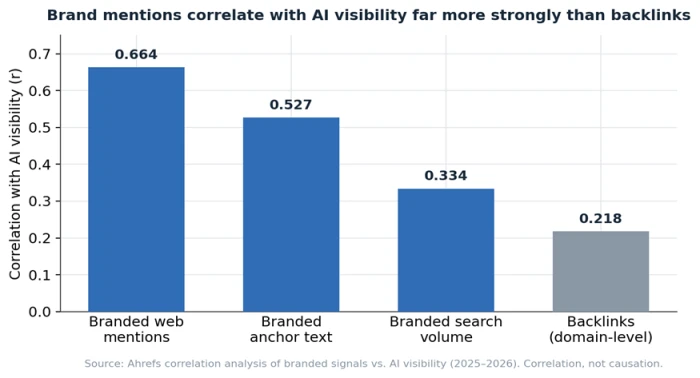
Figure 2. Branded signals outrank backlinks as predictors of AI visibility. Source: Ahrefs correlation analysis (2025–2026).
Why the same question names different brands each time
If you test a prompt today and again next week, the brand list may change. This is not a glitch. It is the nature of the system, and pretending otherwise leads to bad decisions.
Two forces drive it. First, the query fan-out from Stage 0 introduces variance every run. Second, generation is probabilistic, so the model can assemble a different answer from the same evidence. SparkToro’s research put it plainly: AI systems are highly inconsistent when recommending brands, and each platform shuffles sources in its own way. Marketers who track a single lucky result will draw the wrong conclusion.
The reported drift is large. Tracking studies have found that a substantial share of cited domains rotate month to month for the same queries, with even more turnover over longer windows. Numbers vary by study and move fast, so treat any single figure as a snapshot. The practical response is to measure distributions across many prompt variations over time, never a one-off spot check. The chart below shows the broader trend that makes this volatility matter: citations are drifting away from the pages that rank.
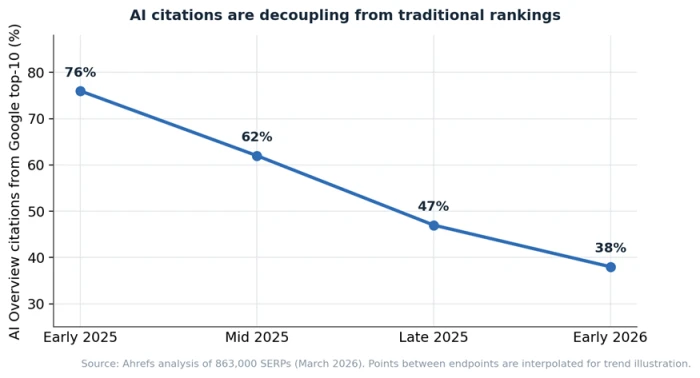
Figure 3. Share of AI Overview citations coming from Google’s top-10 organic results, over roughly one year. Source: Ahrefs analysis of 863,000 SERPs (March 2026); intermediate points interpolated for trend.
What the research proves about content that gets cited
The most rigorous public evidence comes from the Princeton-led GEO study presented at KDD 2024, which tested nine content changes across roughly 10,000 queries and a benchmark built to mimic a generative engine. The headline finding: the right changes lifted a source’s visibility in AI answers by up to 40%.
The winners were consistent. Adding relevant statistics, quoting named sources, and citing authoritative references all produced sizable gains, while plain, clear language helped and keyword stuffing performed worse than doing nothing. The logic is simple: when a model synthesizes an answer, it reaches for concrete, attributable units. A specific percentage or a named quote is easy to lift. Vague prose is not.
| Content change | Effect on AI visibility | Why it works at the selection gate |
|---|---|---|
| Add relevant statistics | Strong positive | Gives the model a discrete, verifiable fact to quote |
| Quote named sources | Strong positive | Attribution raises the model’s confidence in the passage |
| Cite authoritative sources | Positive | Signals research depth and grounding |
| Use plain language | Positive | Clear text parses reliably; complexity hurts extraction |
| Keyword stuffing | Worse than baseline | Reads as low-quality, machine-generated filler |
These findings invert old keyword habits. Substance and clarity beat optimization tricks. And notice the recursion: an article that itself uses dated statistics and named quotes is more likely to be cited, which is part of why this one does.
There is a second, sometimes overlooked truth about where citations come from. Yext analyzed 6.8 million AI citations across the three largest engines and found that 86% came from sources brands already control or strongly influence.
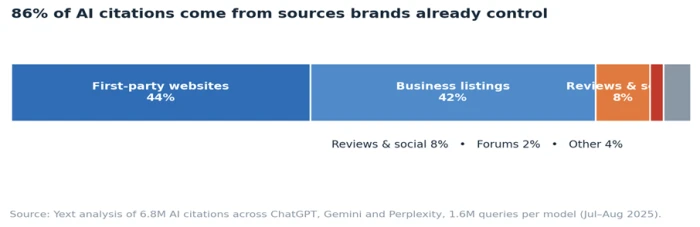
Figure 4. Most AI citations trace back to brand-managed sources, not forums. Source: Yext, 6.8M citations across ChatGPT, Gemini and Perplexity (Jul–Aug 2025).
That reframes the whole challenge. The 42% from business listings is the clearest example: your Google Business Profile and your industry-directory entries are assets you already created but probably never optimized for machine extraction. The gap is rarely access. It is alignment.
Every engine decides differently
Optimizing for “AI search” as one thing does not work, because each engine runs its own version of the pipeline with its own source preferences. Independent citation studies covering hundreds of millions of references agree on the broad shape even as exact figures shift.
| Engine | How it answers | Favored sources | Fastest lever for you |
|---|---|---|---|
| ChatGPT | Memory-leaning, names many brands on commercial queries | Wikipedia, major news, blogs | Earned press and consistent entity signals |
| Perplexity | Retrieval-heavy, many footnotes per answer | Reddit, review sites, mixed web | Presence on review and comparison pages |
| Google AI Overviews | Selective, names brands sparingly | Blogs, YouTube, some community | Structured, extractable pages and video |
| Gemini | Leans on Google’s ecosystem | Blogs, YouTube, Google surfaces | Well-structured content plus video assets |
Two platforms carry outsized weight almost everywhere. YouTube is cited far more than any other video source across engines, and Reddit is consistently among the most-cited domains overall. A brand that has only ever optimized its own website is ignoring the channels with the highest citation odds.
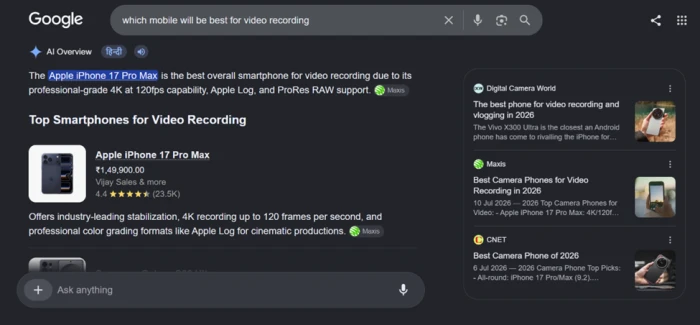
Why your brand may be getting skipped: a stage-by-stage diagnosis
When a competitor keeps showing up and you don’t, the cause is almost never product quality. It is a broken gate. Walk them in order and stop at the first one you fail.
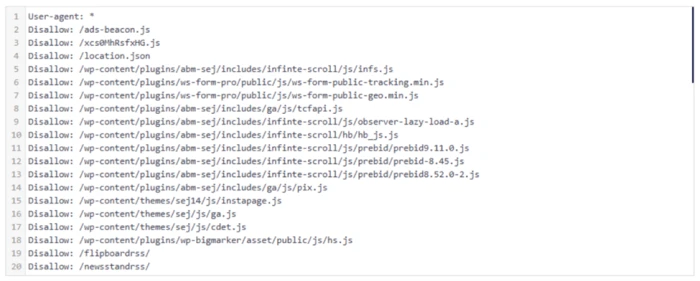
Blocked or unreadable (Gate 1). Your robots file blocks AI agents, or your content only renders through scripts the crawler cannot run.
• Ambiguous entity (Gate 2). Your name or category differs between your own site and the directories and review platforms that describe you, so the model cannot pin you down.
• Not extractable (Gate 3). Your answer is real but buried in narrative, with no standalone paragraph the model can lift.
• No outside proof (Gate 4). You have a polished site and nothing else. A competitor mentioned on five other pages reads as the safer choice.
• Stale or off-intent (Gate 5). Your data is old, or your page answers a slightly different question than the one being asked.
How to tell whether it is working
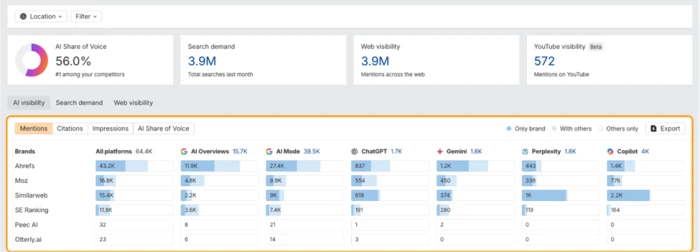
Because a single answer is noisy, measurement has to be built for volatility from the start. How to run an AI citation audit covers the tooling in depth; the short version has four moving parts.
• Build a prompt set. Write 15 to 25 questions a real buyer would ask, and run each one across the major engines: ChatGPT, Perplexity, Gemini, and Google AI Overviews.
• Read the answers, not the ranks. Record who is mentioned, who is cited, and which URLs shape each response. Your competitors’ cited sources are your target list.
• Check server logs. Look for visits from AI crawlers as a leading indicator that you are eligible to be retrieved at all.
• Track a share over time. Measure how often you appear across the whole prompt set, repeated on a schedule. One reading tells you nothing; a trend tells you everything.
Expect the numbers to wobble week to week. You are looking for the direction of the trend line, not a fixed position. Citation gains from off-site work also lag content changes, often by several weeks, so give each change time before you judge it.
What to fix first, in order
The gates suggest their own priority. Do the cheap, foundational work before the slow, compounding work, so each later effort has something to build on.
1. Weeks 1 to 4: clear the entity. Unblock AI crawlers, then make your name and category identical everywhere: your own site, your Wikidata entry, your Crunchbase profile, and every business listing you own. This alone often restores citations for brands that were being dropped at Gate 2.
2. Weeks 3 to 8: make content liftable. Add a direct-answer opening to your key pages, embed real statistics and named quotes, and build the comparison and “best-of” pages that dominate commercial answers.
3. Ongoing: earn outside proof. Shift effort from raw link building toward being discussed and reviewed on the sources each engine already trusts. Reddit and YouTube carry outsized weight, and so do the review platforms in your category.
4. Ongoing: monitor and iterate. Run the prompt-set audit on a schedule, watch the trend, and follow the leading indicators before the citations themselves catch up.
Where this is heading
The direction of travel is toward fewer cited sources carrying more weight. As engines get more confident, a category may be resolved by two or three trusted entities rather than a page of blue links, and being one of those entities will matter more than ranking for a hundred keywords.
That creates a compounding advantage. Brands that build clear entity signals and broad third-party proof now will see their citations grow steadier as the systems learn to trust them, while latecomers face both higher volatility and the harder job of displacing an established answer. The window is open because most brands have not moved. It narrows every month one of them does.

Comments 0
Join the discussion and share your perspective.
Sign in to post a comment and reply to other readers.
No comments yet
Be the first to share your perspective on this article.