1
Multi model access
Access to various third party AI models and bots, praised for breadth but criticized for quality gaps.
Aggregator app for multiple AI chatbots and user-created bots, using a point system for usage. Attractive to AI tinkerers, but heavy complaints about pricing, limits, bugs, and unreliable or restrictive AI responses.
Independent review — we test tools ourselves and analyze public user reviews. How we test.
Poe offers convenient access to many AI models and user bots in one place, which some users find helpful, especially where alternatives are restricted. However, reviews describe severe pricing pain, opaque point usage, glitches, inaccurate answers, and very weak customer support. Billing issues, payout disputes for bot creators, and spam or unwanted charges are recurring red flags. It best suits experimental users who highly value consolidated model access and accept high cost, bugs, and policy friction.
Poe is a chatbot platform from Quora, and its name stands for Platform for Open Exploration. The idea behind it answers a specific problem. Most people who use AI seriously end up juggling a ChatGPT login, a Claude login, a Gemini login, and a separate image tool, each with its own subscription. Poe collapses that into one account and one billing relationship.
Inside, you reach text models from OpenAI, Anthropic, Google and xAI, plus image generators, search bots and more than a million custom bots built by other users. Everything runs on a single currency called compute points. A short message to a lightweight model costs a few points. A heavy reasoning run or an image costs far more, so the model you pick directly controls what you spend.
The second pillar is creation. Anyone can build a bot by writing instructions on top of a base model, no code required, then publish it for others. That turns Poe into a marketplace rather than a plain chat window.
Access to various third party AI models and bots, praised for breadth but criticized for quality gaps.
Point based usage metering widely criticized as confusing, fast draining, and punishing for failed outputs.
Large collection of community bots, appreciated by some, but many find discovery difficult and disorganized.
Some reviewers like creative outputs, particularly with certain models, though others find them shallow or error prone.
Helps users in restricted regions reach models otherwise unavailable, one of the few consistently positive notes.
Multiple paid plans with daily limits, frequently labeled overpriced and misleading versus expectations.
Integrations with external tools like 3D mesh generators, criticized for missing download options and wasted credits.
Associated with spam complaints and unsolicited emails shortly after signup.
I signed in on the free plan, and the first thing Poe put in front of me was my credit balance. 300 points, shown as roughly $0.0091 in value, with a note that the pool resets to 300 the next day rather than stacking on top of whatever I had left. The timer made the ceiling clear. Nothing carries over.
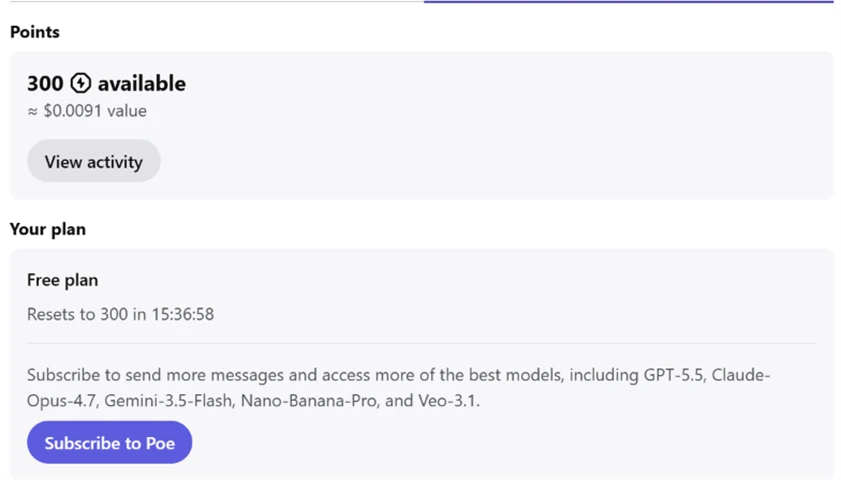
That number framed every test that followed. 300 points reads as generous until you watch one request spend most of it.
Poe’s Explore screen stacks bots into rows by purpose. The Official row held names like GPT-6-Astra, Claude-Opus-5.5, Claude-Fable-5.1, Grok-4.7, Kimi-K3 and Mistral-Large-4. A Budget-friendly row sat below it with lighter options such as GPT-5-mini and Gemini-3-Flash, then separate rows for search bots and image bots.
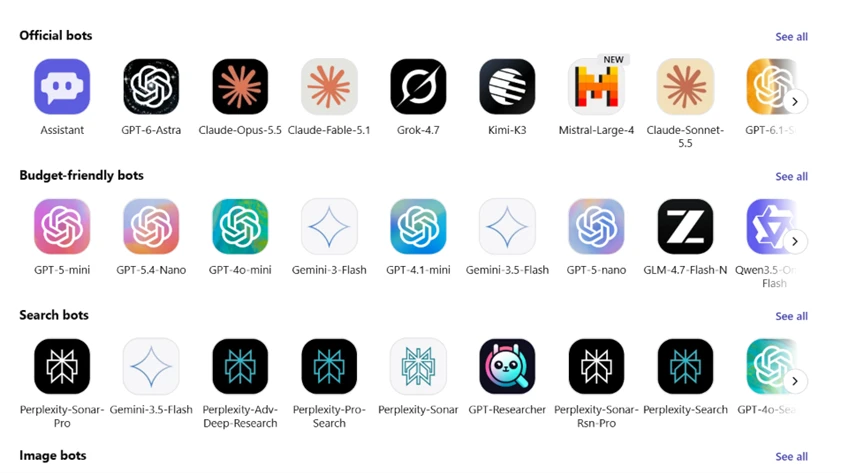
One account reaches models from four competing labs: OpenAI, Anthropic, Google and xAI, all in the same list. For anyone paying two separate subscriptions to get that spread today, the consolidation is the real pull.
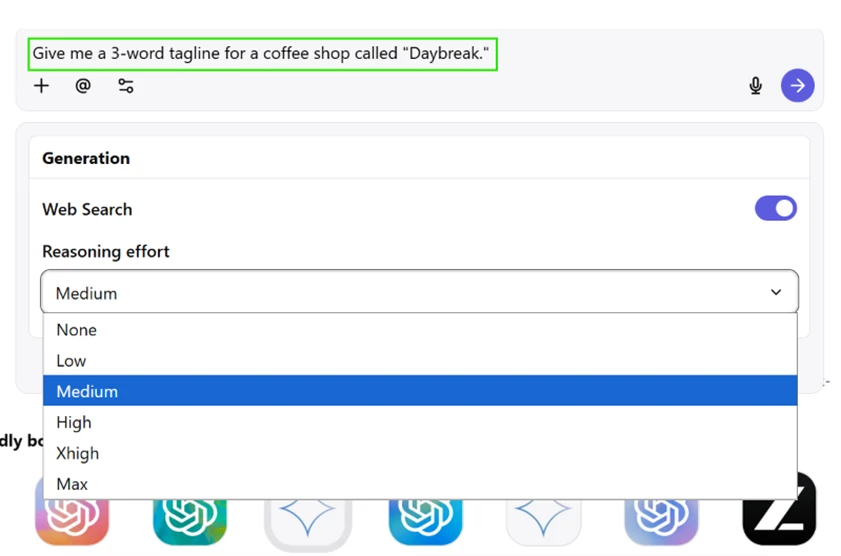
My first prompt went to the default Assistant bot with web search switched on and reasoning effort set to Medium. I asked for a three-word tagline for a coffee shop called “Daybreak.”
The reply landed fast: “Wake. Sip. Shine.” Hovering over the response opened a control row for reply, follow up, branch and copy, with an edit option alongside.
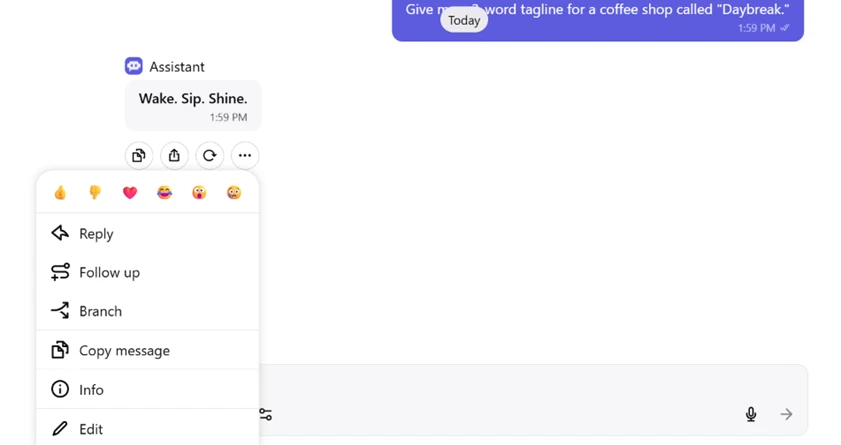
The branch control earned its place. It forks a conversation from any message so you can chase a different direction without losing the original thread. That request cost 26 points.
Creating my own bot took under a minute and no code. Poe runs it through a Behavior panel. I picked a base model from a dropdown, GPT-5.4 in my case, typed instructions into the prompt box, and the bot was ready to publish.
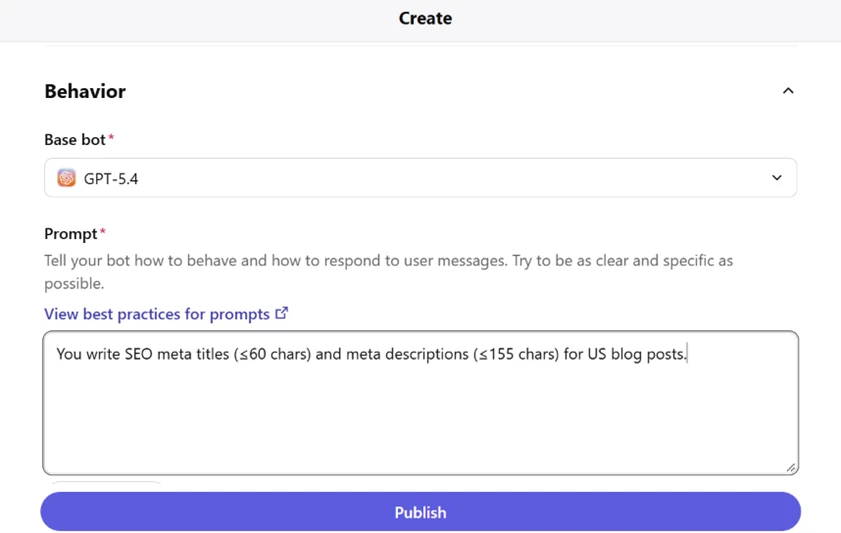
My instruction told the bot to write SEO meta titles under 60 characters and meta descriptions under 155 characters for US blog posts. The same panel sets a greeting message and controls who can access the bot. For a task I repeat daily, this beats retyping the same system prompt into a fresh chat every time.
Then I hit the wall. I asked the Assistant for a photorealistic image of a golden retriever wearing sunglasses on a beach.
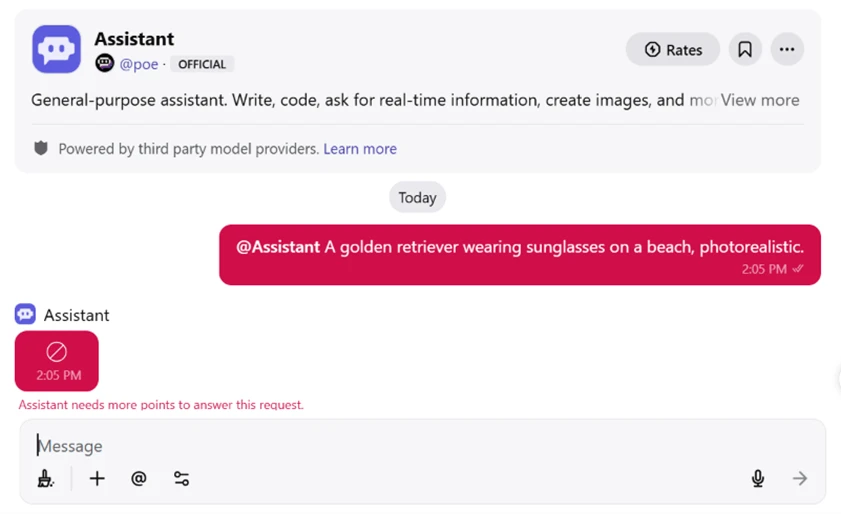
No image came back. Instead I got a red block reading “Assistant needs more points to answer this request.” The popup attached a number to it. The request wanted 2,400 points. I had 242.
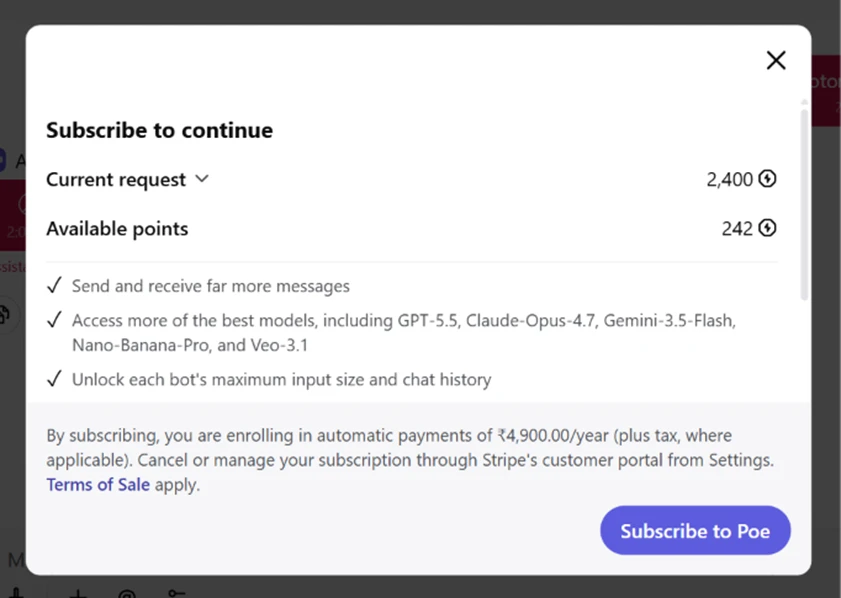
Image generation is priced out of the free plan. A single image runs eight times the entire daily allowance, so on 300 points a day you cannot produce one.
Text work fared better. I uploaded a 592 KB Word file and asked for a summary in three bullet points.
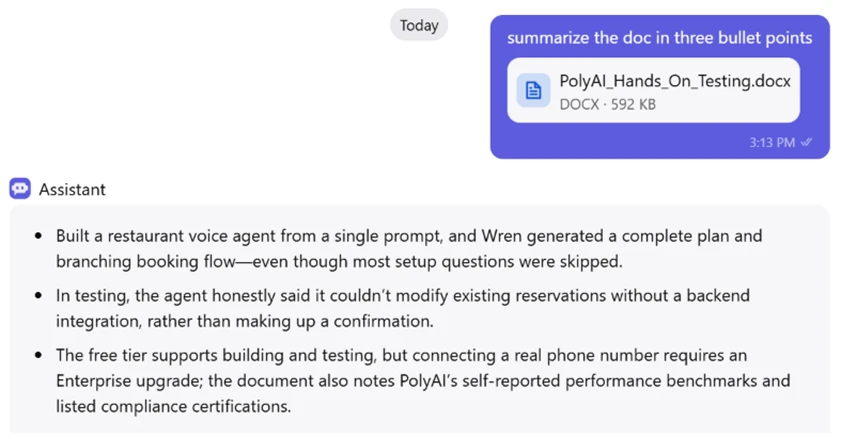
Poe took the document apart accurately. The file described building a restaurant voice agent from a single prompt. The summary also caught that the agent admitted when it could not change a reservation rather than inventing a confirmation, and that the free tier covered testing while a real phone number required an enterprise upgrade. It cost 31 points. Document handling sits well inside what the free plan allows.
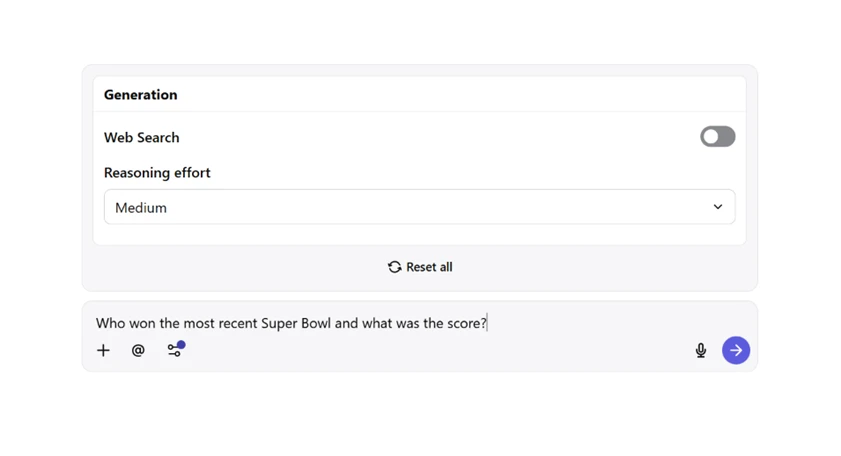
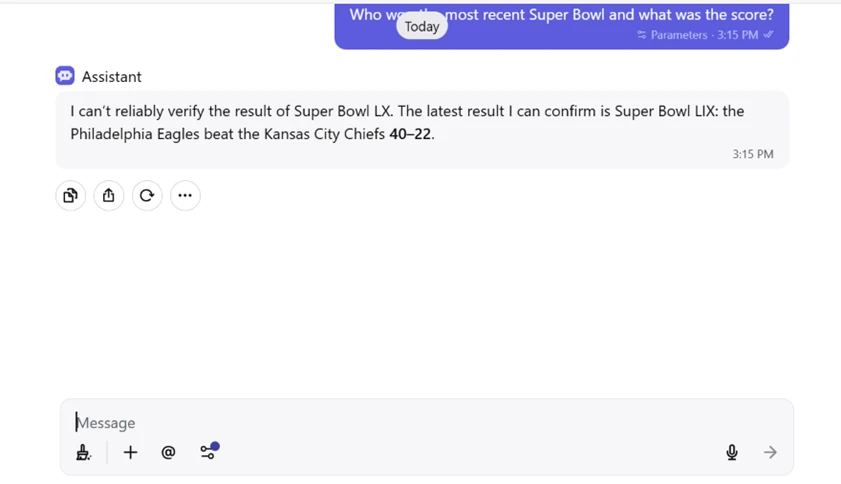
This was the run that told me the most. I asked the same factual question twice and changed one setting between them.
First, with web search switched off, I asked who won the most recent Super Bowl and the score.
The answer was honest about its own limits. It said it could not reliably verify Super Bowl LX and handed me the prior year instead, Super Bowl LIX, Eagles over Chiefs 40-22.
Then I switched web search on and asked again.
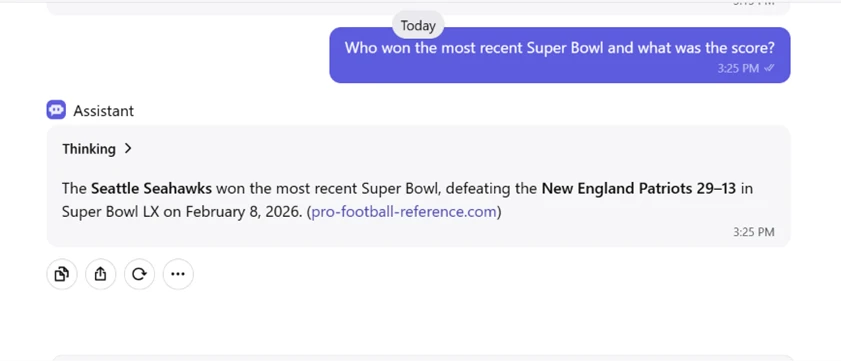
This time it got the answer right and cited pro-football-reference. The Seattle Seahawks beat the New England Patriots 29-13 in Super Bowl LX on February 8, 2026. Accuracy rides entirely on that toggle. Left off, the model falls back to stale training data and tells you so.
The cost gap is where this gets sharp. The web-search-off answer cost 11 points. The web-search-on answer cost 200.
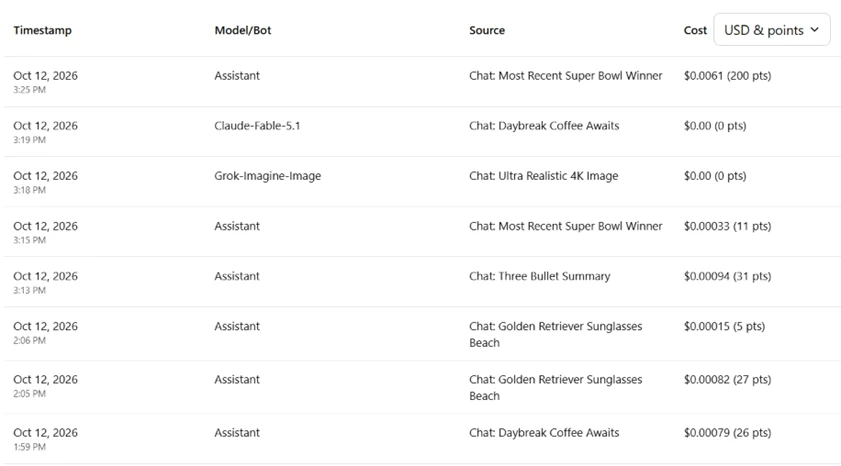
The activity log, switched to USD and points, lays it out. One current-information question with search and reasoning turned on swallowed 200 of my 300 daily points in a single shot. Two-thirds of a day’s allowance for one factual lookup.
I pushed once more, sending a tagline prompt to Claude-Fable-5.1, a premium model, straight from the home screen.
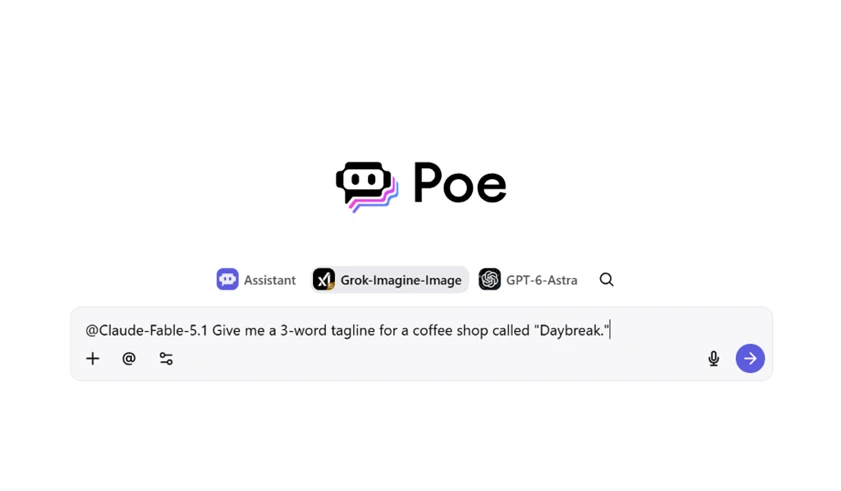
The request was blocked before it ran. The popup showed it needed 8,219 points against the 200 I had left. And you can see to ask a question with Fable is expensive than creating an image from Assistance.
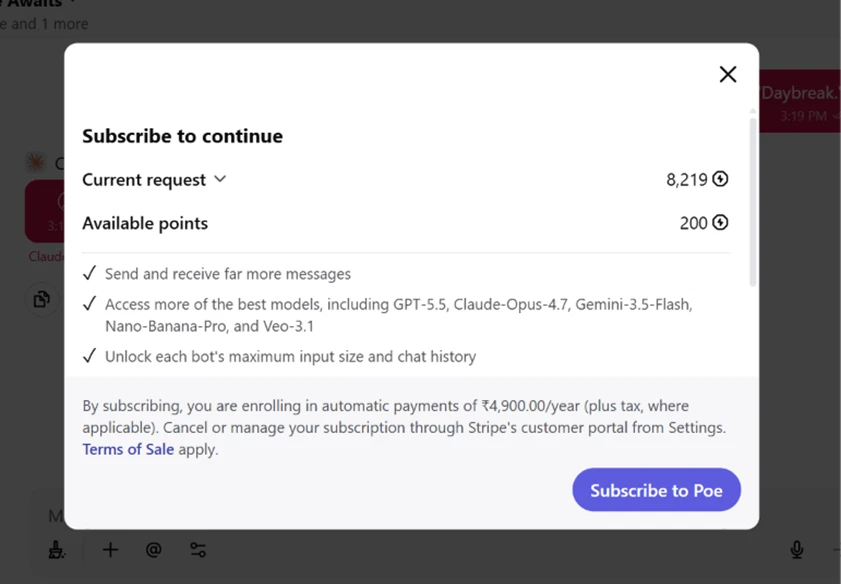
My balance was effectively gone. To see what removing the ceiling costs, I opened the subscription page.
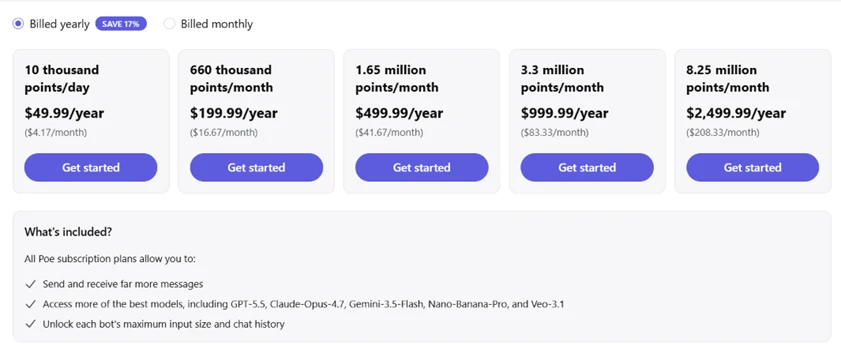
The paid ladder bills yearly. The entry plan is $49.99 a year for 10,000 points a day. Above it sit four monthly-pool plans at $199.99, $499.99, $999.99 and $2,499.99 a year, climbing from 660,000 points a month to 8.25 million. The $199.99 tier, Poe’s main paid option, bundles 660,000 points a month.
| Dimension | Our test | User signal | Verdict | Composite |
|---|---|---|---|---|
| Output Quality Accuracy, depth, consistency | 7.5 | 7 | Good | |
| Ease of Use Interface and navigation clarity | 8 | 7.5 | Good | |
| Value for Money Price versus usable benefits | 5 | 4 | Weak | |
| Reliability and Stability Glitches, failed responses, uptime | 7 | 6 | Moderate | |
| Customer Support Responsiveness and resolution quality | 5 | 4.5 | Weak | |
| Transparency and Trust Billing clarity and data handling | 7 | 6 | Moderate |
Toolscopia uses cookies to keep you signed in, remember your preferences, and understand how our reviews get read. Analytics are anonymous. See our privacy policy for the full detail.



Comments 0
Join the discussion and share your perspective.
Sign in to post a comment and reply to other readers.
No comments yet
Be the first to share your perspective on this tool.