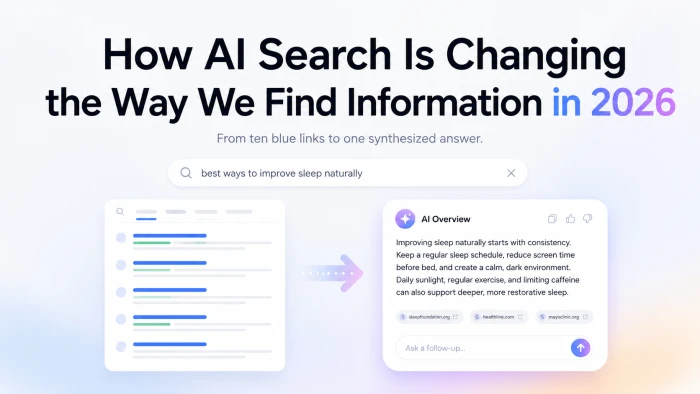
The shift from ten blue links to one synthesized answer, by the numbers.
Think back to the last time a search actually sent you to a website. For a lot of people, that memory is going fuzzy. Inside Google’s AI Mode, roughly 93% of searches now end without a single click. The answer appears at the top of the page, the question feels resolved, and the row of blue links that ran the internet for two decades sits there unopened.
This is the quiet half of a loud change. Search still looks familiar. You type into a box and something comes back. What comes back, and where it came from, have both shifted underneath us.
The results page stopped being a set of directions and started being a destination.
This article follows that change from the ground up. We begin with what people actually mean by AI search, open up the machinery that produces those instant answers, then sit with the numbers before tracing how our own habits bent to fit the system. Later sections reach the part publishers lose sleep over, and the reason a citation is now worth chasing harder than a top ranking.
What People Mean When They Say “AI Search”
AI search is a loose label stretched over several products that behave differently. Pulling them apart matters, because each one bends your habits in its own way.
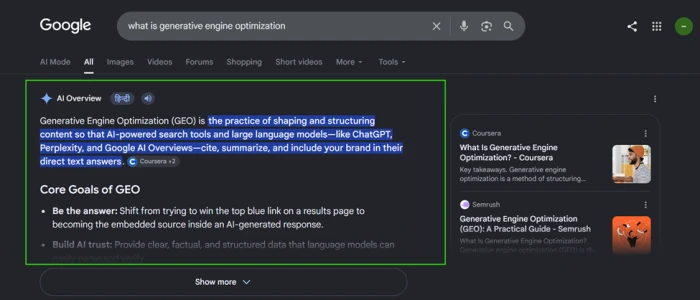
The version most people meet first is the AI Overview, the summary Google now prints above the normal results. You did not ask for it and you did not leave Google, yet the answer is already sitting there. A second version, AI Mode, is a separate conversational tab where the whole experience is a back-and-forth instead of a list. Then come the chat-first engines like Perplexity and ChatGPT Search, built from scratch around answering rather than linking.
| Type | What it is | Where you see it |
|---|---|---|
| AI Overview | An AI summary printed above the normal results on a standard search page. | |
| AI Mode | A separate conversational tab where the whole session is a back-and-forth. | Google AI Mode |
| Chat-first engine | A tool built around answering that searches the web and replies directly, with citations. | Perplexity, ChatGPT Search |
| Assistant answer | A general chatbot that pulls live web results into the middle of a conversation. | Copilot, Gemini |
A common thread runs through every row: fewer links to choose from, and one synthesized answer doing the work a full page of results used to do. That single answer is the reason so many searches now end where they begin.
The distinction is easy to miss in daily use. Most people cannot tell you whether the answer they just read came from an AI Overview, a chat engine, or an assistant, and the systems rarely announce themselves. What the reader feels is simply that the search got faster and the reading got shorter.
A Look Under the Hood
To understand why AI search summarizes instead of listing, it helps to watch what happens in the second after you press enter.
A traditional search engine spent years building a giant index, a card catalogue of the web, and its job was to hand you the call numbers for the most relevant shelves. You did the reading. AI search keeps the crawling but changes the ending. It reads for you and hands back the finished paragraph. Here is the sequence most AI answers move through:
1. Crawl. Automated bots visit pages, follow links, and read what is on them.
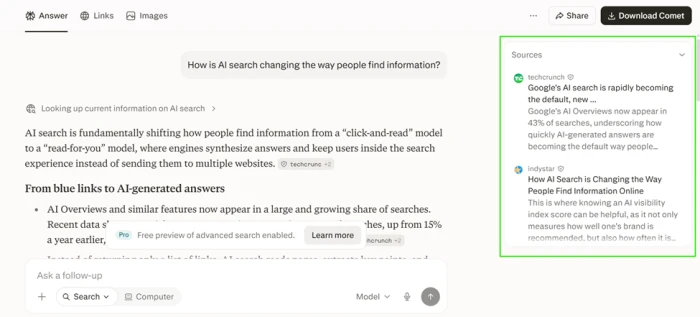
2. Retrieve. The system pulls passages that match your question from several sources at once.
3. Synthesize. A large language model fuses those passages into one plain-language reply.
4. Cite. It links back to a handful of the sources it leaned on, so the answer stays checkable.
That third step is the real break from the past. A classic engine matches your keywords to documents and ranks them. A language model reads the documents and writes something new out of them. The output stops being a pointer to information and becomes the information itself, already chewed over.
Picture a real question moving through those steps. You ask whether oat milk is better for the planet than almond milk. The crawler has already read farming studies, product pages, retailer reviews, and news explainers. The retriever grabs the passages about water use and land use from a few of them. The model weighs those passages against each other and writes a short verdict with a caveat. What lands on your screen is a small essay no single source wrote, assembled on the spot for your exact question.
One consequence shows up right away. Because the model works from live content each time it is asked, freshness and clarity carry more weight than they did for a static index. We come back to that in the publishing section, where it reshapes how content gets written.
The Numbers Behind the Shift
Habits change quietly, but the data is loud. Four charts carry most of the story.
Google’s answer box took over the top of the page
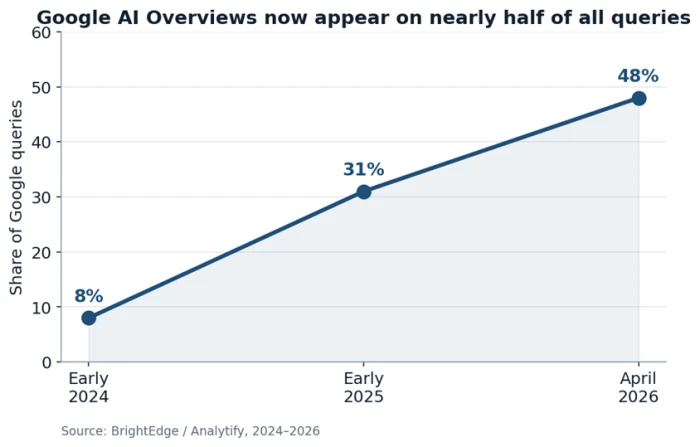
In early 2024, AI Overviews showed up on roughly 8% of Google queries. By early 2025 that had climbed to about 31%, and by April 2026 it reached 48%, close to half of everything people search. The answer box went from novelty to default in a little over two years.
The click is disappearing
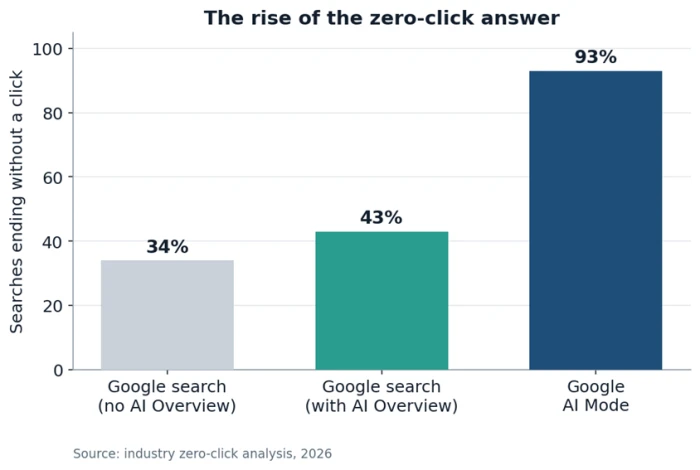
When no AI Overview appears, about 34% of Google searches still end without a click. Add an AI Overview and that rises to 43%. Inside Google’s full AI Mode it jumps to 93%. The more AI stands between you and the web, the less often you travel to an actual page.
For anyone who runs a website, that gap is the whole ballgame. A search that once delivered a visitor now answers them in place and keeps them home.
One assistant still dominates, for now
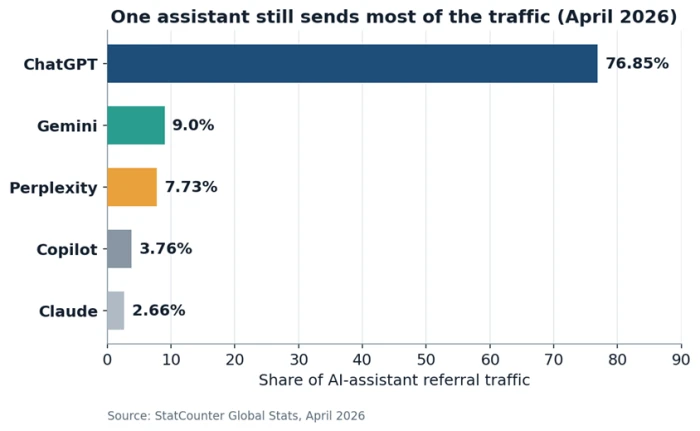
Among AI assistants sending referral traffic, ChatGPT led with 76.85% in April 2026, down from 84.21% a year earlier. Gemini reached 9.0%, Perplexity 7.73%, with Copilot and Claude splitting most of what remained. The direction matters more than the ranking here. The leader is shrinking as the field fills in.
And the traffic AI does send is climbing fast
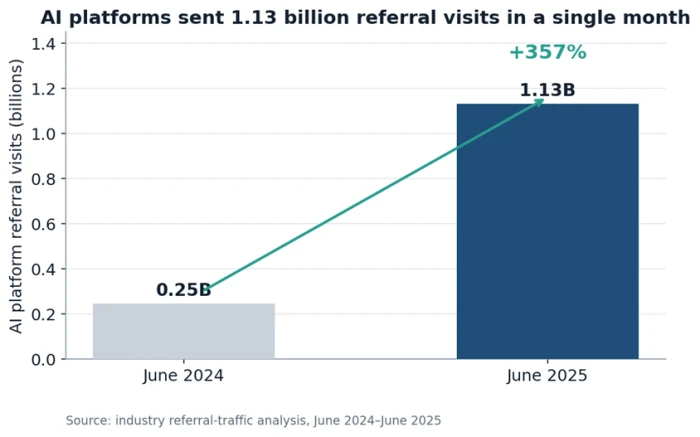
AI platforms sent about 1.13 billion referral visits in June 2025, a 357% jump from the same month a year earlier. Those referrals still make up only around 1% of total web traffic, while organic search holds a bit over half. The base is small and the slope is steep, which is why several forecasts put AI search visitors ahead of traditional search visitors by around 2028.
Scale is the backdrop to all four charts. ChatGPT alone crossed a billion monthly users in mid-2026 and now fields on the order of two billion queries a day, a volume that would have counted as a major search engine on its own a few years ago. The behavior in these charts reaches well past early adopters. Hundreds of millions of ordinary people are changing how they ask, all at the same time.
From Keywords to Conversations
Numbers describe the system. The more personal change is in us, in the words we type.
For twenty years, searching meant compressing a thought into two or three keywords and scanning what came back. cheap flights tokyo. best running shoes flat feet. We learned to speak in fragments because the machine rewarded fragments.
AI search rewards the opposite. People now type full questions in natural language, then ask a follow-up, then another, the way you would question a knowledgeable friend. Google reported that after AI Mode launched, people searched more and also searched differently, asking longer and more specific things they would never have typed into a keyword box.
A single search now unfolds like a dialogue. Someone planning a trip might open with a full question about the best time to visit northern Japan, read the reply, then ask about cherry blossom timing, then narrow to a specific week, then ask what to pack for it. In the old model those would have been four separate keyword hunts, each starting cold. Now they are one continuous thread, with the system carrying the context forward at every turn.
There is a reason this took a real jolt to happen. Information habits are sticky. Researchers at Nielsen Norman Group found that once someone settles on a reliable way to find things, that method turns almost instinctive, and it takes a strong incentive to break it. Getting a full answer in one step, with no page-hunting, turned out to be a strong enough incentive.
The expectation underneath the new behavior is blunt. Answer me first, explain later. People want the response up front, then the supporting detail if they choose to read on. Content that buries its point under a slow warm-up loses the reader, and increasingly loses the machine scanning for a clean passage to quote. As the next section shows, that trade has winners and losers.
What We Gained, and What Slipped Away
Every shift in how we find things carries a trade, and this one is no different.
On the winning side, speed is obvious. A question that used to mean opening six tabs and reconciling them now resolves in a sentence or two. Synthesis is the quieter gift, because the system reads across sources and stitches them into one coherent reply, saving the tedious work of doing that in your head. Follow-up questions turn the whole thing into a conversation with something that remembers what you just asked.
The losses are real too, and quieter.
Source diversity narrows first. A page of ten links exposed you to ten viewpoints, even the ones you skipped past. A single synthesized answer chooses for you, and the choosing happens somewhere you cannot see. Confident errors ride along with the convenience, because a model can phrase a wrong answer as smoothly as a right one. The serendipity of stumbling onto something better than what you searched for fades when the system hands you exactly one result.
There is a quieter cost to how we learn. Scanning several sources, even clumsily, taught people to notice disagreement and weigh who was speaking. A single confident answer smooths that friction away, and some of the habit of doubt goes with it. The convenience is genuine. The skill it quietly replaces is worth keeping in view.
For the wider web, the cost lands on publishers. As the zero-click charts showed earlier, the visits that once funded independent sites are being absorbed at the top of the results page. A model trained on the open web can end up starving that same web of the traffic that keeps it alive. The tension is unresolved, and it sits directly underneath the advice in the next section.
What This Means If You Publish Anything
If you write for a living, or write to be found, the ground has moved and the old playbook needs an edit.
The core skill now is getting quoted by the machine, a practice people have started calling generative engine optimization, or GEO. It sits on top of classic SEO rather than replacing it. Google has said the pages feeding AI Overviews come from its normal web index, so ranking well is the entry ticket. The twist is that ranking is no longer the finish line.
A handful of patterns separate content that gets cited from content that gets skipped:
● Answer first, in a clean block. Put a direct, self-contained answer of roughly 40 to 90 words right under a heading phrased as the question. That is the exact shape a model looks for when it scans for something to lift.
● Prove real experience. First-hand testing and original data, presented under a named author with genuine credentials, signal the experience and expertise that AI systems now weigh heavily.
● Structure for extraction. Descriptive headings, short lists, well-formed tables, and plain labels give the machine clean handles to grab. Walls of text give it none.
● Stay fresh and add schema. Updated dates plus Article or Author markup help the system parse and trust what you published.
The answer-first idea gets concrete fast. A page that opens its GEO section with a paragraph of background gives the model nothing clean to lift. A page that opens the same section with one plain sentence defining GEO, then puts the background underneath, hands the model a ready-made citation. The writing that wins is often the writing that states the point up front and trusts the reader to keep going.
There is hard data under this advice. Analyses of AI Overviews find that signals of experience and authority correlate strongly with which pages get chosen, one study putting that correlation at 0.81 and finding 96% of cited content came from sources the system already treats as authoritative. Pages that earn a citation inside an AI answer see roughly 35% more organic clicks than rivals that go uncited. Being cited is not a runner-up prize but the main event.
Here is the counterintuitive part. Only about 12% of the URLs that AI engines cite also rank in Google’s traditional top ten. A page can sit fourth in the blue links and still be the passage the AI quotes, or rank first and get ignored because a competitor answered the exact question more cleanly. The citation game and the ranking game overlap, yet they reward different things.
Where AI Search Goes Next
The last two years reset the interface. The next two look set to reset the timing and the senses.
Search is drifting from something you pull toward something that arrives. Predictive discovery uses your past behavior and real-time context to surface answers before you type the question, so the engine starts acting less like a card catalogue and more like an assistant reading the room. The box waits for you a little less each year.
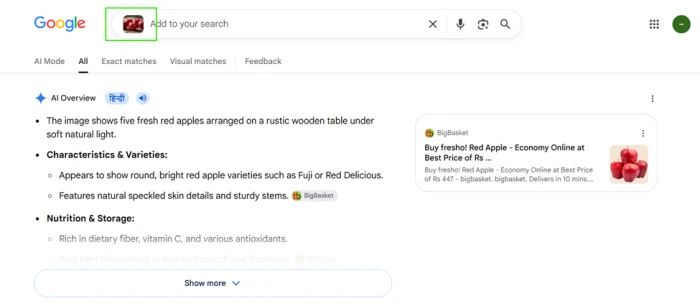
It is also outgrowing text. Google reported that more than one in six searches in the United States now involve something beyond typed words, from pointing a camera at an object to speaking a question aloud. The query is going multimodal, and the answer is following it into images and interactive results.
Buying is sliding into the same loop. In one 2026 survey, 24% of consumers said they were comfortable letting an AI agent shop on their behalf, a share that climbed to 32% among Gen Z. A search that used to end with a list of products is starting to end with a finished task instead.
Underneath both trends is a change in what search is for. It is moving from find me an answer toward be my guide, from a system that retrieves to one that reasons and recommends. That is a larger promise and a heavier responsibility, because a guide you trust to choose for you holds far more influence than a list you scanned yourself.
Which sources that guide chooses to trust is being decided right now, one query at a time, and the pages published this year are the training data shaping the answer.


Comments 0
Join the discussion and share your perspective.
Sign in to post a comment and reply to other readers.
No comments yet
Be the first to share your perspective on this article.