1
Large tool catalog
Tens of thousands of AI tools in one place.
OpenFuture AI is a web directory that lists tens of thousands of AI tools across dozens of categories, with search, filters, and favorites. It is free to browse, but its trust and quality signals are weak.
Independent review — we test tools ourselves and analyze public user reviews. How we test.
OpenFuture AI lands at a combined 3.5 out of 10, a huge catalog undermined by serious trust problems. The database is real, more than 40,000 tools across 75 categories, with working search and pricing filters, and that breadth is the only strong point. Everything around it raises flags. The page hides hundreds of gambling links in white text on a white background, clicked by accident. There is no stated method for how tools are recommended, no company or team named anywhere, no author on the blog posts, and several listings use a placeholder logo instead of the real tool. A featured-picks slot even carries an NSFW tool. Browse it for ideas if you must, but verify everything and avoid the hidden links.
OpenFuture AI is an AI tools directory, a site that catalogs third-party AI products so visitors can browse and compare them rather than a tool of its own. It markets itself as the largest, fastest, and most accurate database in the space.
The catalog is organized into roughly 75 categories, from image and video generators to developer, finance, and legal tools. A search box and pricing filters, free, freemium, paid, and more, help narrow the list. Tabs separate All, Recommended, and New Added tools, and logged-in users can favorite or vote on listings.
Each listing has a card with a logo, tags, a short description, and a Visit Site link that sends you to the vendor. The site is free to browse and offered in more than a dozen languages.
The operator is not named. The footer shows only an OpenFuture copyright, the About page gives a generic description with no team, and the site carries no stated methodology for its recommendations.
Tens of thousands of AI tools in one place.
Roughly 75 categories to filter by.
Narrow by free, freemium, free trial, or paid.
A search box across the full catalog.
Logged-in users can save and vote on tools.
Curated and freshly added sections.
A page for creators to list their own product.
Available in more than a dozen languages.
OpenFuture AI calls itself the largest, fastest, most accurate AI tools directory. We went in to see whether the database lives up to that, and whether the site around it can be trusted. The headline is split: the catalog is genuinely large, and what surrounds it is not something we can recommend.
The front door is impressive on paper. A search bar sits over a count of 40,627 tools across 75 categories, with tabs for All, Recommended, and New Added.
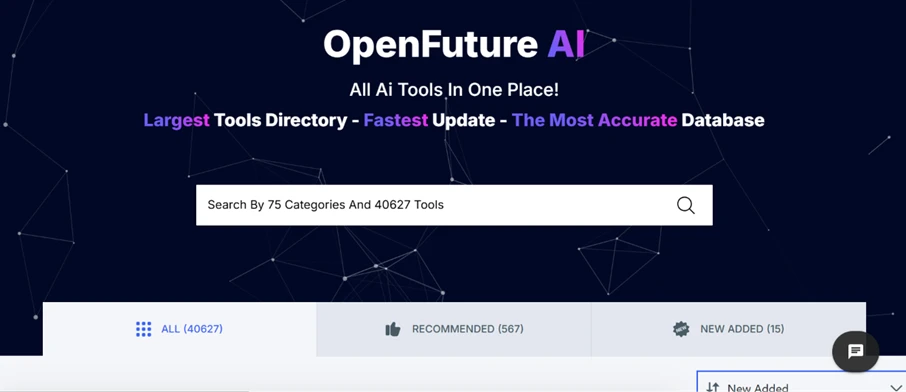
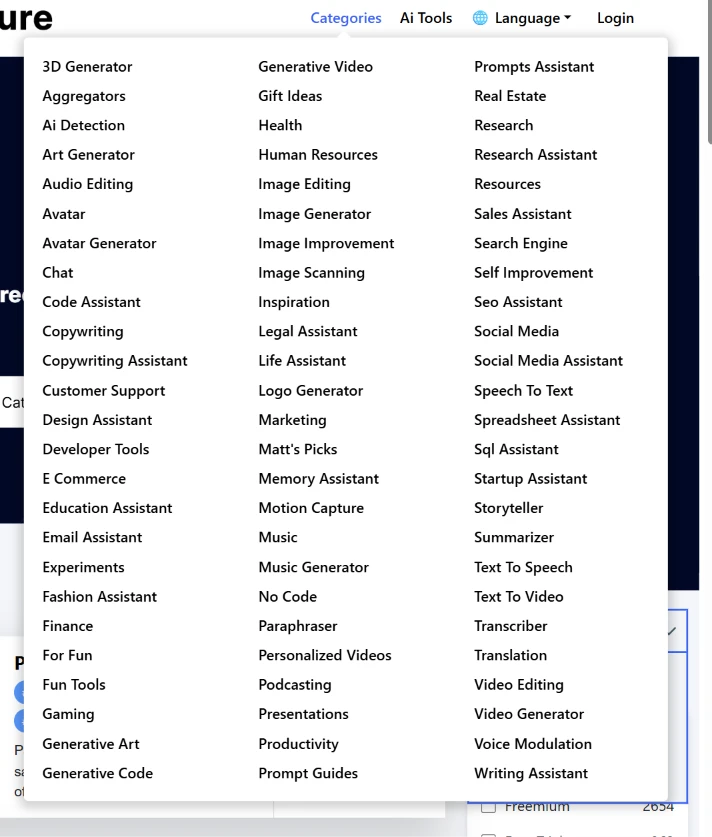
The category menu backs that up with real breadth, from image and video generators to developer tools, finance, and legal assistants. Search and the pricing filters work. If raw size were the only measure, OpenFuture would score well.
Open an individual listing and the quality drops. We landed on “Pax Historia,” described as an alternate-history sandbox game, which is not an AI tool at all. It carried zero favourites and zero votes, so there is no real user signal anywhere.
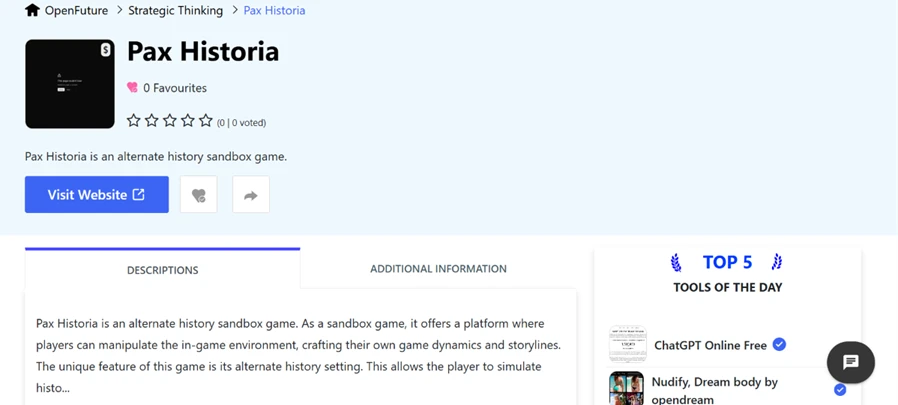
The featured “Top 5 Tools of the Day” beside it includes a “Nudify” nudify tool, sitting on an otherwise mainstream-looking page. And across many cards the tool image is not the tool at all; it is OpenFuture's own hexagon logo used as a placeholder, a sign of listings generated in bulk rather than curated.

This is the finding that defines the site. Scroll past the visible footer and the page looks empty, just a copyright line and a lot of white space.
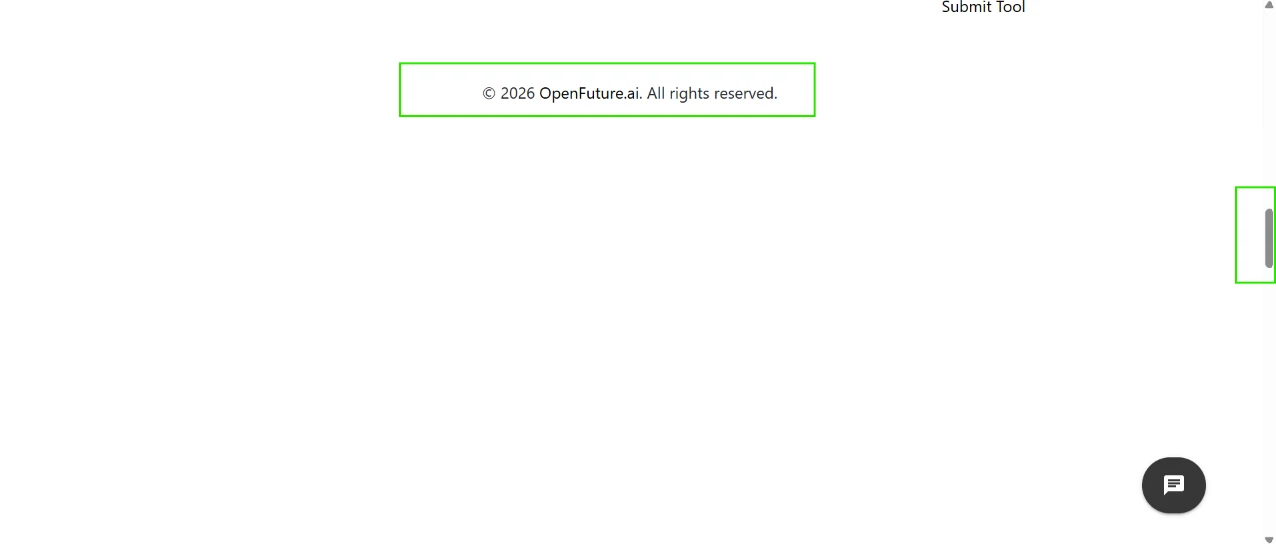 | 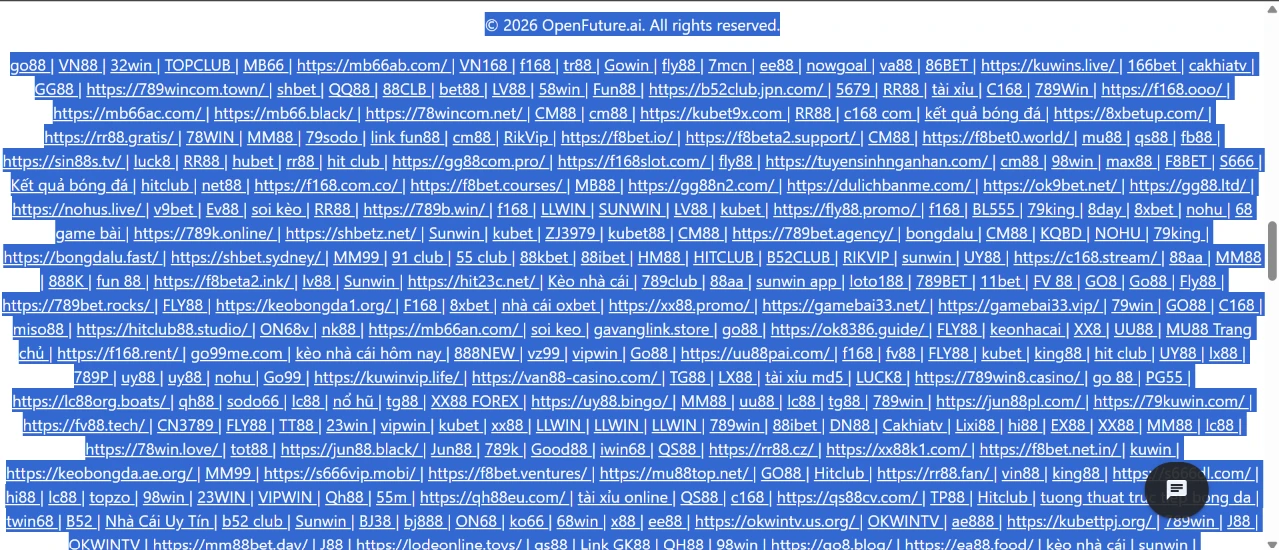 |
It is not blank. Selecting that white space reveals it is packed with hundreds of gambling and betting links, white text set on a white background so the eye cannot see them. A visitor scrolling or dragging there clicks casino links by accident.
This is a classic black-hat SEO cloaking technique, and it is the single biggest reason to distrust the site. Hidden link farms like this get domains penalized by search engines and point visitors toward gambling pages they never meant to open. Nothing else on the page outweighs it.
For a directory that asks you to trust its recommendations, there is no one behind it. The footer lists topics and policy links but names no company and gives no methodology for how tools get “recommended,” which leaves those picks reading as affiliate placements.
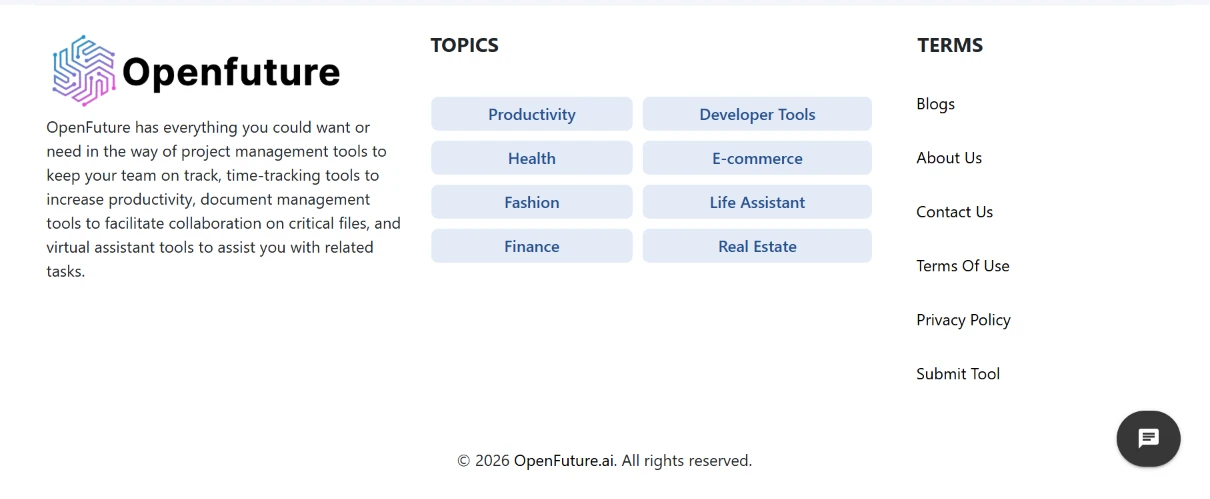
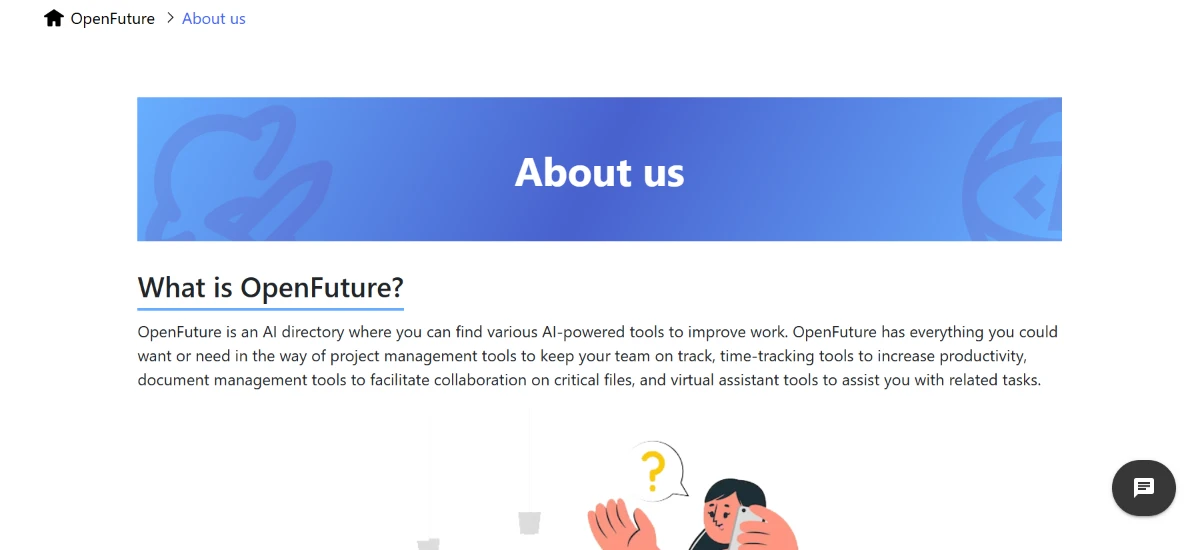
The About page is a generic paragraph with no founder, team, or real person attached. The blog posts carry no author bylines. On top of that, the one creator-facing feature, Submit Tool, is broken: it demands a login, logs you straight back out, and will not let you sign in to submit at all.

| Dimension | Our test | User signal | Verdict | Composite |
|---|---|---|---|---|
| Database Size Breadth of the tool catalog | 8 | 8 | Good | |
| Listing Quality Accuracy and depth of individual entries | 3 | 3 | Weak | |
| Curation & Method Whether recommendations have a stated basis | 2 | 2 | Weak | |
| Trust & Safety Hidden links, ads, and content concerns | 1 | 1 | Weak | |
| Transparency Named operator, team, and authors | 3 | 2 | Weak | |
| Usability How well search, filters, and features work | 5 | 4 | Weak |
Toolscopia uses cookies to keep you signed in, remember your preferences, and understand how our reviews get read. Analytics are anonymous. See our privacy policy for the full detail.



Comments 0
Join the discussion and share your perspective.
Sign in to post a comment and reply to other readers.
No comments yet
Be the first to share your perspective on this tool.