1
Multi-engine malware scan
Checks a domain against more than 90 security blacklists in one pass.
SiteScano is a free website reputation checker that scores any domain from 1 to 100, backing each verdict with security, ownership, and reputation signals that human analysts review before the report goes public.
Independent review — we test tools ourselves and analyze public user reviews. How we test.
SiteScano earned our recommendation after a week of daily checks. It behaves like a tool built by people who actually investigate websites, and the reports read that way. New American shoppers get a fast, plain-language answer they can act on before spending money. Site owners get a watchdog that catches trouble early and explains why. The free tier alone answers the question most people arrive with. Nothing about the experience felt padded or oversold. If you check unfamiliar sites often, this belongs in your bookmarks. We finished the week trusting it more than we expected to.
SiteScano is a website reputation and safety platform that scores any domain from 1 to 100 and explains the reasons behind that number. It sits in the same category people know from Scamadviser, though it leans harder on human checking than most rivals.
The service works on demand. A report exists once a real person asks about a domain, and every finished report stays public at its own URL, so the next person searching that site gets an answer with no wait. Over time this builds a searchable library of checked domains that anyone can browse for free.
Two kinds of people use it. Visitors run a check before trusting an unfamiliar shop or a link from a message. Owners use the paid side to watch their own site for trouble between visits.
Checks a domain against more than 90 security blacklists in one pass.
Confirms the certificate is valid and the connection is secure during the scan.
Pulls registration date and hosting country for every domain.
Shows how many quality sites link in, using licensed Ahrefs data.
Lets visitors flag a suspicious site or a wrong fact in a report.
Every check gets its own URL that anyone can open later.
Watches a site you own and pings you when its reputation moves.
Any disputed fact can be challenged and fixed on a stated timeline.
We did not want to judge SiteScano on its marketing copy, so we ran our own domains through it and watched what came back at each step. Everything below happened on the free, logged-out version of the tool.
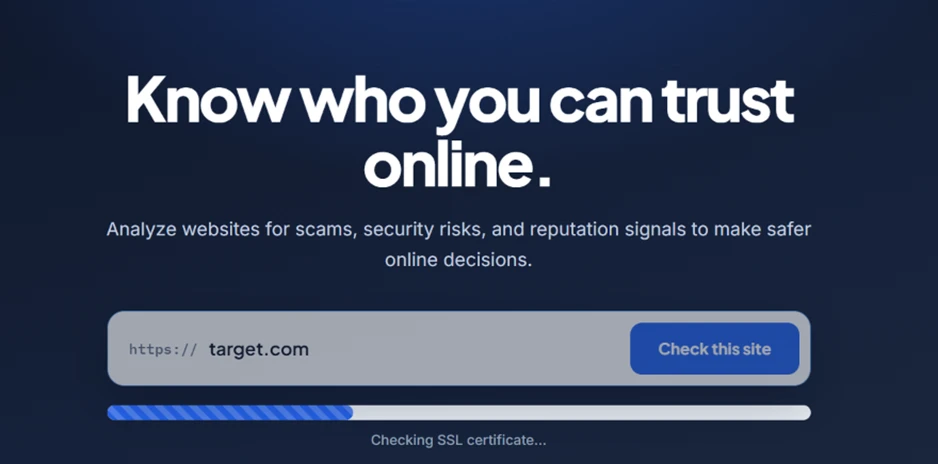
We started with target.com, a name most American shoppers already trust. The second we hit check, the tool started working and showed us the exact check it was running at that moment instead of a blank spinner.
A few seconds later the report opened on a score of 93 out of 100, sitting in the green Safe and Secure band.
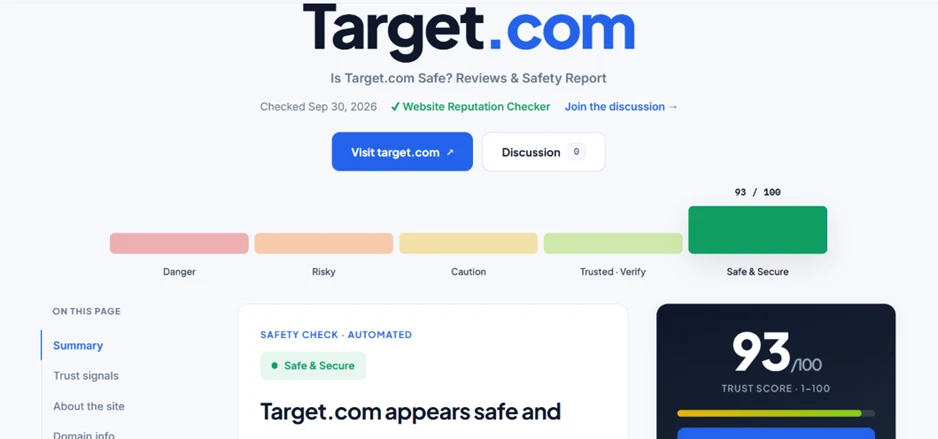
Two things stood out on this first run. The progress bar told us what it was doing rather than leaving us guessing. The final number arrived inside a color-coded band that runs from red to green, so we read the verdict before a single line of detail. The whole thing needed no account and no payment. For a shopper checking an unfamiliar store before entering card details, that speed matters more than any feature list.
Plenty of safety tools hand you a number and keep the recipe secret. SiteScano publishes the recipe on its methodology page.
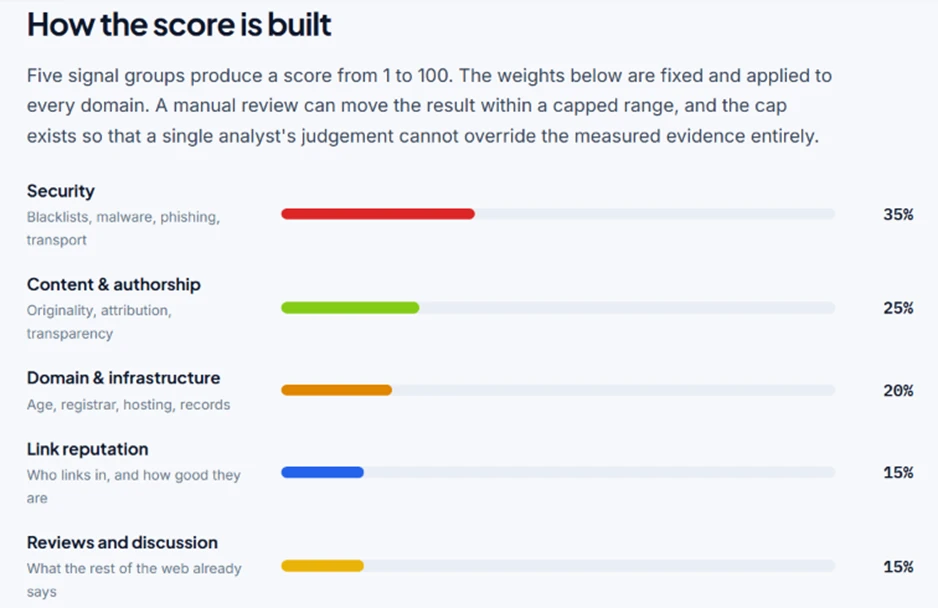
Security carries the heaviest weight at 35 percent, which lines up with what most visitors worry about first. Content and authorship come next at 25 percent, then domain and infrastructure at 20 percent. Link reputation and on-site reviews make up the rest at 15 percent each.
We also checked whether a human reviewer could quietly override the math. The page answers that head on: a manual review can move a score only inside a capped range. That single rule stopped us worrying that one analyst could inflate a favorite site.
The strongest moment of our testing came on a report for an online store called Sellvia. SiteScano placed each homepage promise in one column and what it actually found in the next.
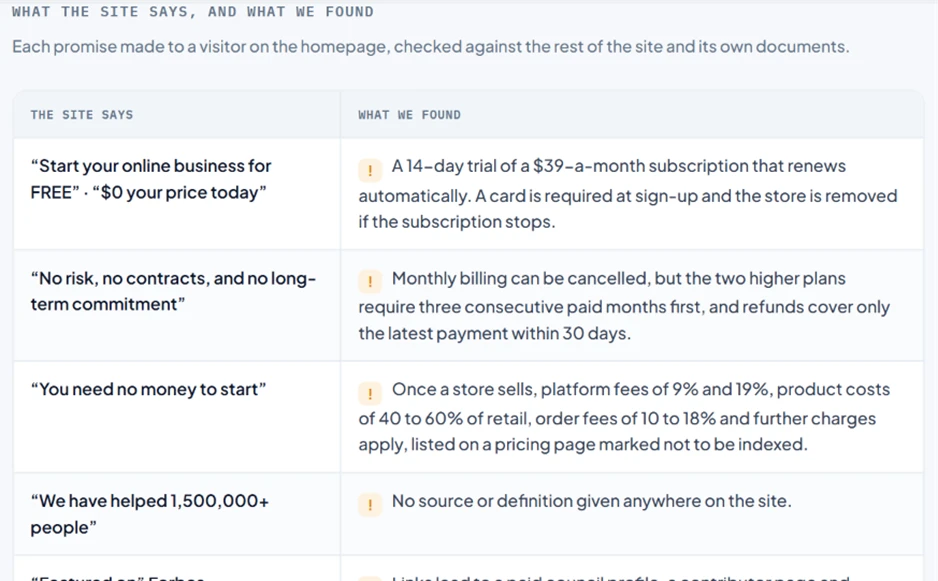
The homepage said “Start your online business for FREE.” The tool noted that the free store is a 14-day trial of a $39-a-month subscription that renews on its own. A claim of helping more than 1,500,000 people came back marked as having no source anywhere on the site.
This is the legwork a careful shopper would do by hand over a long afternoon. Seeing it in one table saved us that afternoon.
A single review score is easy to game, so we liked that the tool refused to lean on just one.
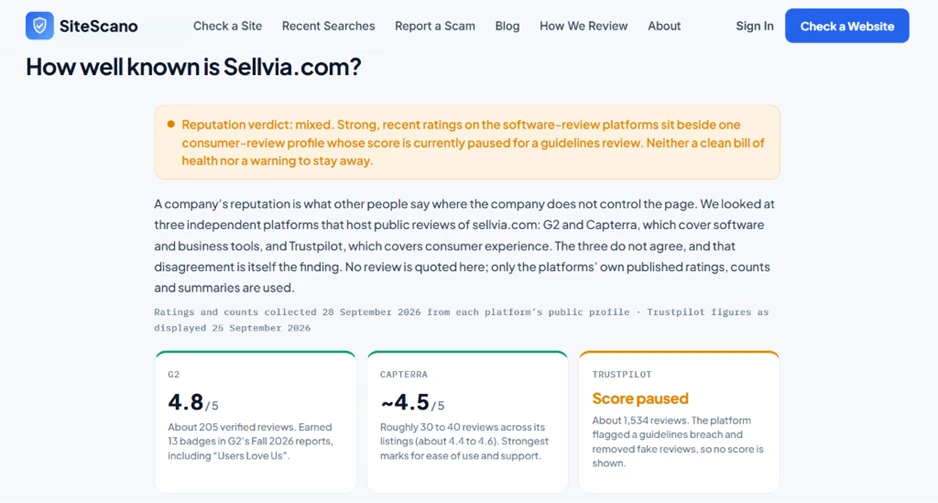
For the same Sellvia report, it gathered ratings from G2 and Capterra on the business-software side, then set those beside a Trustpilot profile that everyday consumers use. G2 showed 4.8 out of 5. Capterra sat around 4.5. Trustpilot had paused its score after the platform removed fake reviews.
Rather than blending those into one tidy average, SiteScano flagged the disagreement itself and called the result mixed. It told us the paused Trustpilot score was the reason for caution. We would take that kind of honesty over a clean number that hides the conflict.
Anonymous verdicts are hard to trust. SiteScano puts faces and job titles on the people running its manual reviews.
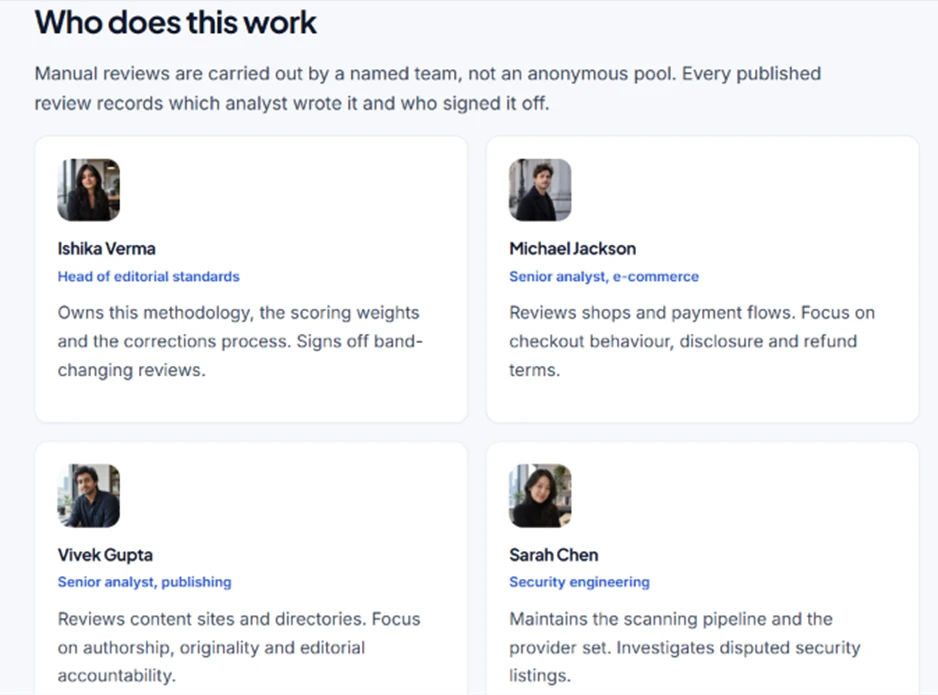
The editorial lead, Ishika Verma, is listed as the owner of the scoring method and the person who signs off any review that shifts a site into a different band. A separate analyst handles shops and payment flows. For a US reader deciding whether to trust a safety rating, a named person standing behind it carries real weight.
Most tools oversell themselves. This one does the opposite in a section we did not expect to find.
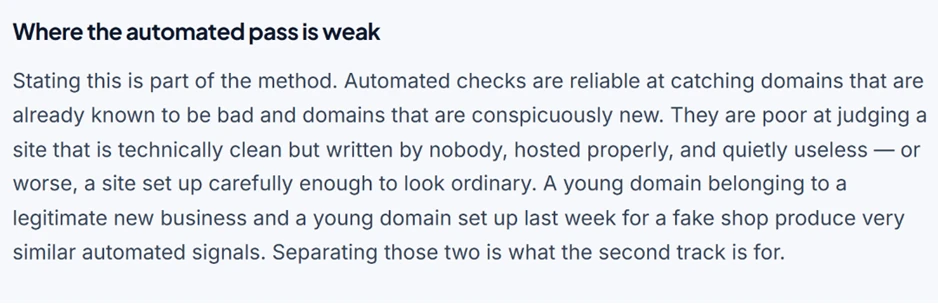
SiteScano states plainly that automated checks are good at catching sites already known to be bad, and weak at spotting a site that looks clean but was built to deceive. A brand-new honest business and a week-old fake shop can throw off the same signals. That admission is the reason the manual review layer exists, and reading it made us trust the automated score more, not less.
Not everything is free, and we went in expecting that.
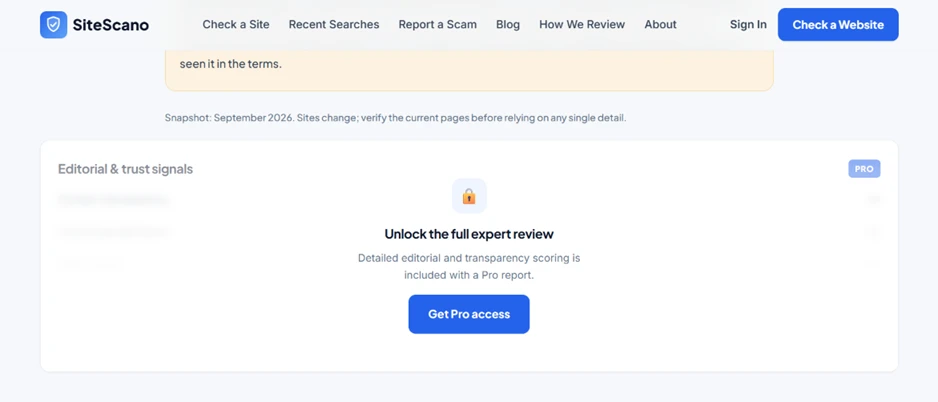
The detailed editorial and transparency scoring is held back for Pro reports. We could still see that the section existed and what it would cover, with a lock over the values. Giving away the full safety verdict for free and reserving only the deeper editorial breakdown feels like a fair line for a tool that costs nothing to use.
The paid plans are built for people who own the site being watched, not the casual visitor running one check.
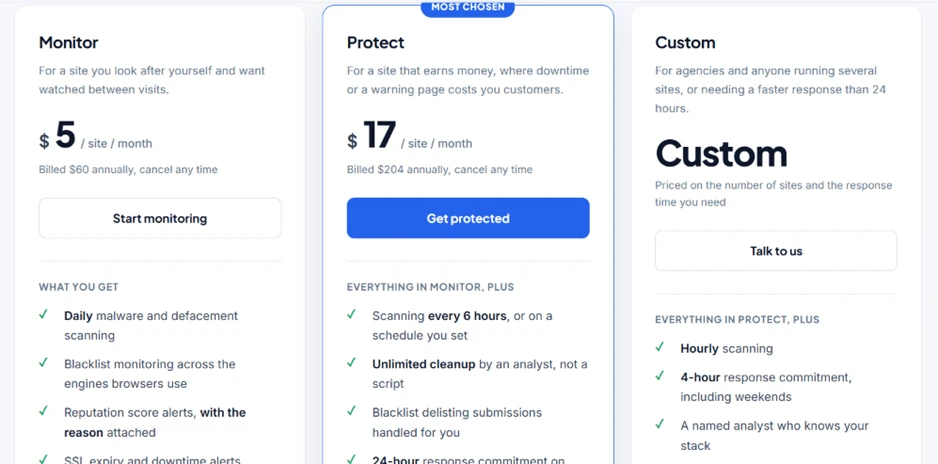
Monitoring starts at $5 per site each month, billed at $60 a year. The middle plan, Protect, runs $17 per site and is marked as the most chosen, adding scans every six hours plus cleanup handled by a real analyst. Agencies running several sites get a Custom plan priced on volume and response time.
For a small US business owner who wants an alert the moment a site is flagged, $5 a month is an easy call.
| Dimension | Our test | User signal | Verdict | Composite |
|---|---|---|---|---|
| Scan Speed How fast a report loads after you check a domain | 9 | 9 | Excellent | |
| Score Accuracy How well the verdict matched a site's real reputation | 8 | 8 | Good | |
| Evidence Depth How much proof sits under each score | 9 | 9 | Excellent | |
| Ease of Use How simple the first check feels for a newcomer | 9 | 10 | Excellent | |
| Transparency How openly the method and its sources are shown | 10 | 9 | Excellent | |
| Coverage How many domains already have a ready report | 7 | 7 | Good |
Toolscopia uses cookies to keep you signed in, remember your preferences, and understand how our reviews get read. Analytics are anonymous. See our privacy policy for the full detail.
Comments 0
Join the discussion and share your perspective.
Sign in to post a comment and reply to other readers.
No comments yet
Be the first to share your perspective on this tool.