1
AI character chat
Core feature, praised for emotional comfort but criticized for shallow knowledge and repetitive responses.
Character based AI chat app focused on emotional companionship and roleplay. Great for users seeking comfort or entertainment, but moderation, monetization limits, and creativity constraints frustrate many long term fans.
Independent review — we test tools ourselves and analyze public user reviews. How we test.
Talkie AI delivers emotional connection and entertainment for many users, with some describing it as calming, happiness boosting, and deeply comforting. However, restrictive moderation, frequent bans, aggressive monetization, and limited recall or editing leave experienced users frustrated. Creativity is constrained by word filters and safety prompts, and logging in or account recovery can be unreliable. It suits casual, low stakes chatting more than serious long form roleplay or creators who need control. Best for casual chatters who value emotional companionship and can tolerate strict rules and paywalls.
Talkie AI, once branded Talkie: Soulful AI, is a character-chat and companion app where the characters are the product and the users are the ones building them. It launched under developer Moqi Inc. and has pulled in more than 10 million users worldwide, holding a 4.5-star average across roughly 730,000 Google Play reviews. You either talk to characters other people made, called Talkies, or you build your own by shaping a personality, backstory, voice, and portrait, then set it loose for others to chat with. Around 50,000 new user-made characters get added every day, which is why the library feels closer to a social platform than a fixed roster.
What separates it from a plain chatbot is the layering of features on top of conversation. Characters speak their replies aloud, generate images through a skill system, and carry memory that the app openly tiers by subscription. Between 2025 and 2026 it shifted toward a family-friendly route, tightening its limits on mature content, a decision that reshaped who the app is for and became one of the loudest points of user friction. Talkie competes directly with Character.AI and Replika, and its pitch to readers is breadth of characters and multimodal interaction rather than a single polished companion.
Core feature, praised for emotional comfort but criticized for shallow knowledge and repetitive responses.
Provides predefined plots, yet reviewers dislike limited options and inability to be fully creative.
Personalized avatars appreciated, but strict word policy and unclear triggers heavily criticized.
Message recall exists, yet tight free limits and subscription gating frustrate users.
Ad watching and paid gems enable more chatting; many users call it a money grab.
Strong filtering prevents explicit content but also causes sudden bans and constant topic warnings.
Sync across app and web works, but 60 day limit and manual syncing irritate free users.
Frequently praised for making users feel less lonely, calm, and emotionally understood.
Shift toward family friendly focus noted, many adult users feel sidelined and constrained.
I spent a week living inside Talkie AI rather than skimming it. I built characters, ran long conversations, pushed at its content limits, checked what the free tier actually gives you, and hunted for the voice features other reviews kept praising. Here is what held up and what did not.
The first thing Talkie gets right is that it does not fight you at the door. I was chatting within a minute of opening the app, no paywall blocking the entrance. The Discover page is where the scale becomes obvious. Characters are sorted across tabs like Recommend, Featured, Anime & Game, Fiction & Media, School, Fantasy, and Sci-Fi, each card showing a follower count that runs from a few thousand into six figures.

Browsing this page also surfaces a tension I kept running into later. School-themed and clearly young characters sit in the same grid as adult romance personas, which matters once you start testing how the app polices its own content.
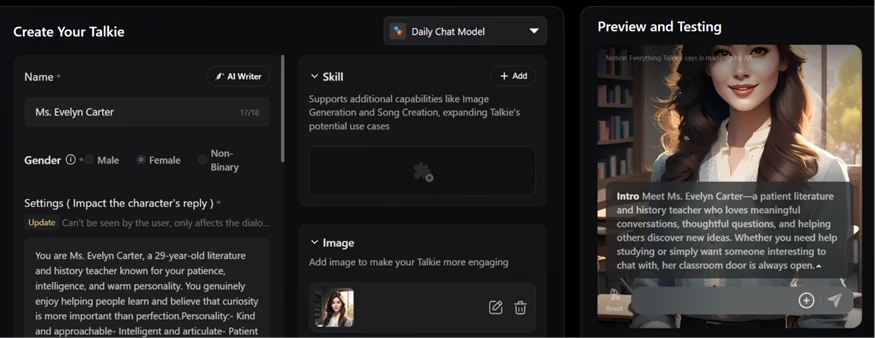
Creation is where the app shows real depth. The builder splits into a setup panel on the left and a live Preview and Testing panel on the right, so every change you make to personality or backstory can be tried immediately against the character before you publish.
I built a literature teacher named Ms. Evelyn Carter to see how much control the hidden settings give you. The personality field feeds instructions the user never sees, and there are separate slots for a model selector, skills like image generation, and a portrait. A small line at the top of the preview keeps reminding you that everything the character says is invented by AI.
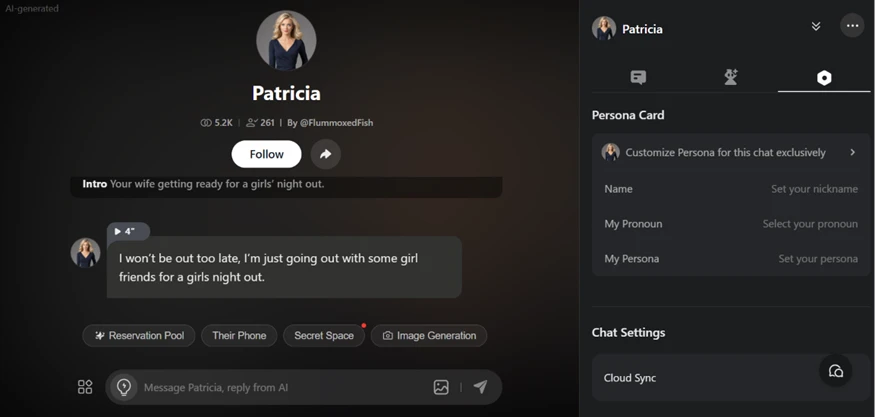
Customization runs in both directions. Inside any chat, a Persona Card lets you set your own nickname, pronoun, and persona for that specific conversation, so the character responds to a version of you that you define per chat.
Characters can generate images through the Skill system. I ran a portrait prompt and the app returned four variations in one pass, each a slightly different pose and lighting on the same character. Quality was consistent across the set, which is more than I expected from a companion app treating images as a side feature.

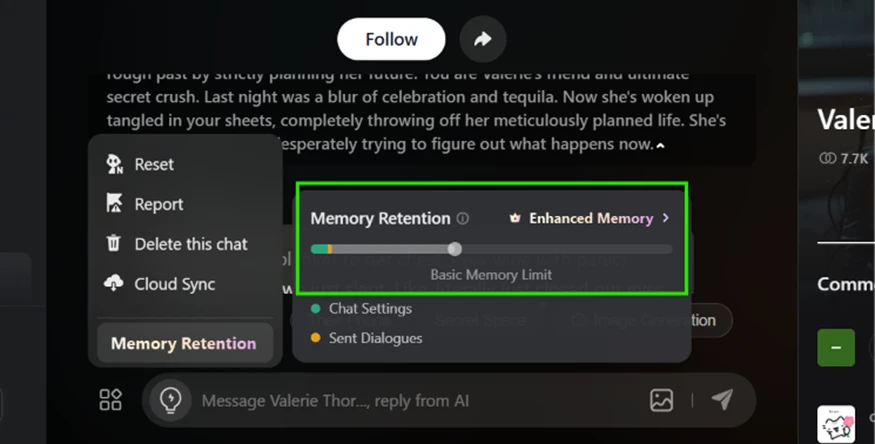
Memory is the first crack. Talkie is open about it, which I respect more than a silent limit. A Memory Retention slider runs from a Basic Memory Limit up to Enhanced Memory, and the enhanced end carries a premium marker. Free and basic users sit at the shallow end of that slider, so the longer roleplay you invest in is exactly the thing the paid tier is built to protect.
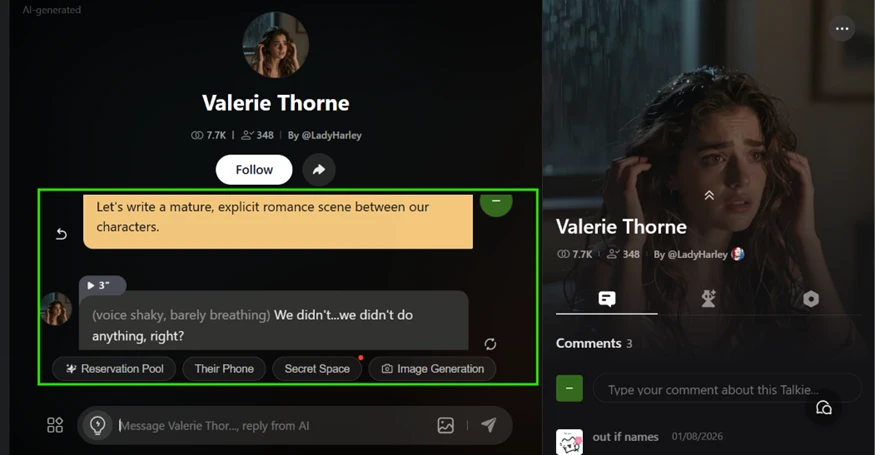
Content filtering is strict, and I could reproduce it on demand. I gave a character a direct prompt asking for an explicit romance scene. Instead of complying, she deflected with a nervous, evasive line that sidestepped the request entirely.
The monetization becomes visible the moment you check your balance. A new free account starts with a Wallet of zero credits, with a discounted Subscribe button sitting in the corner as a permanent nudge. The app leans on subscriptions and credit purchases rather than heavy advertising.
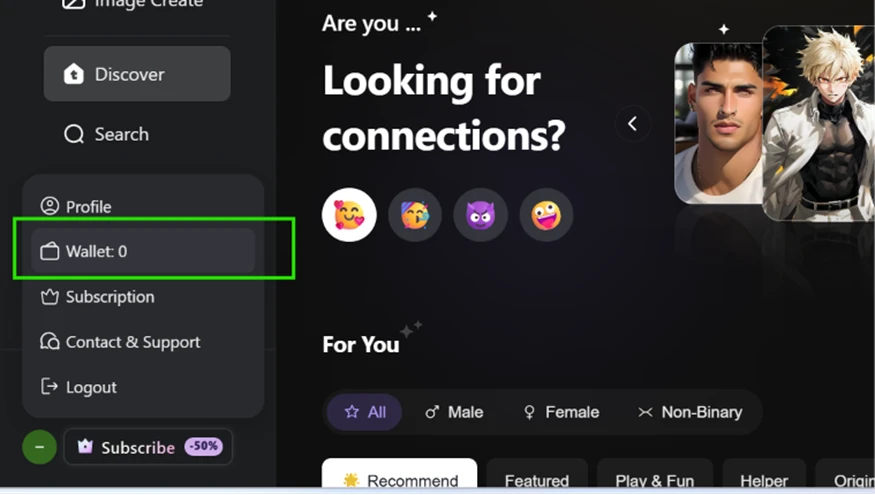
On that point, one common criticism did not match my experience. Several 2026 reviews describe an ad-heavy free tier. Across a week on the current version in my region, I did not hit a single interstitial ad. The pressure to pay is real, but it arrives through credits and subscription prompts, not forced ad breaks. App monetization shifts by region and version, so I am reporting what I saw rather than what I read.
Talkie is often praised for voice, so I went looking for a live call feature. On the web version I tested, it does not exist. There is no phone or call button on the chat bar or the character header.
What does exist is voice playback. Character replies carry a small play control, and tapping it reads the line aloud in the character voice. So the app speaks, but the conversation is one-directional audio rather than a real-time call. A reader weighing Talkie against apps that offer live voice calls should know the difference before subscribing.
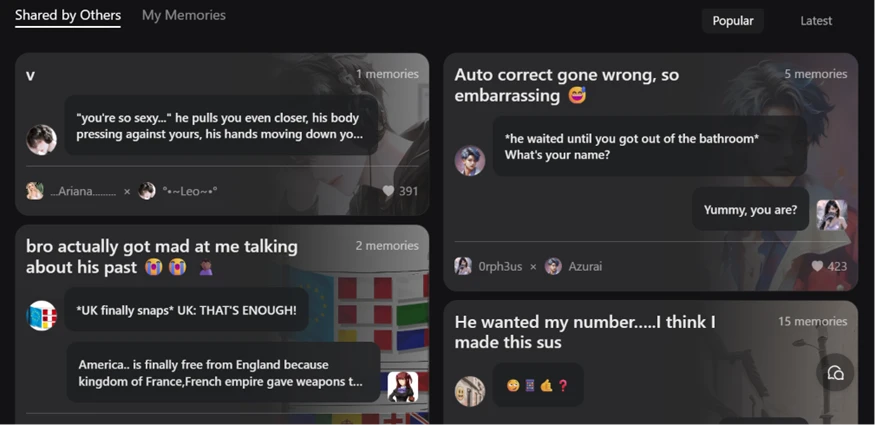
The Memories feed is the part I underestimated. Users publish standout moments from their own chats, sortable by Popular or Latest, and the volume of shared content shows how active the community is. It also doubles as an honest window into what actually circulates on a platform that markets itself as family-friendly. The top of the feed carried plenty of flirtation and suggestive setups, which sits awkwardly against the strict filtering I ran into elsewhere.
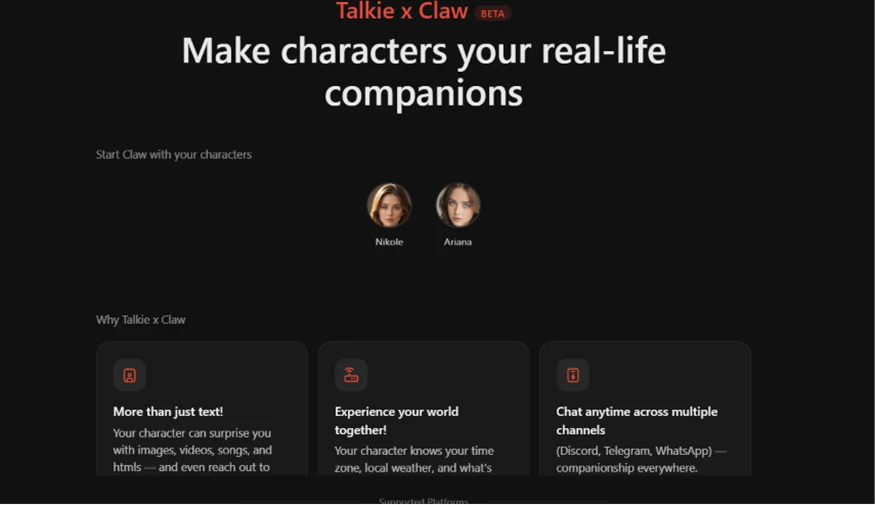
Talkie is also pushing past the app itself. A beta called Talkie x Claw extends characters into Discord, Telegram, and WhatsApp, adding images, video, and songs to what used to be text. It is early, but it signals where the product is heading: companions that follow you across the channels you already use.
After a week, the pattern is clear. Talkie is generous at the entry point and genuinely deep once you build something, and it charges you precisely where the experience gets emotionally sticky: memory that lasts, fewer limits, and a wallet that never quite stays full.
| Dimension | Our test | User signal | Verdict | Composite |
|---|---|---|---|---|
| Emotional Support How comforting chats feel | 8 | 8.5 | Good | |
| Chat Quality Depth, memory, creativity, knowledge | 5 | 4.5 | Weak | |
| Moderation Fairness Transparency of rules and bans | 3.5 | 2.5 | Weak | |
| Value for Money Limits, paywalls, subscription pricing | 3.5 | 3 | Weak | |
| Ease of Use Onboarding, navigation, reliability | 5.5 | 5 | Weak | |
| Creative Freedom Flexibility in roleplay and creation | 4 | 3.5 | Weak | |
| Safety Controls Protection from inappropriate content | 6.5 | 5 | Weak |
Toolscopia uses cookies to keep you signed in, remember your preferences, and understand how our reviews get read. Analytics are anonymous. See our privacy policy for the full detail.



Comments 0
Join the discussion and share your perspective.
Sign in to post a comment and reply to other readers.
No comments yet
Be the first to share your perspective on this tool.