1
AI image generation
Core feature, viewed positively before policy shifts, then criticized after NSFW removal reduced uniqueness.
Yodayo is an AI image and chat platform for creative users, especially those seeking NSFW generation. Recent policy shifts, paywalls, and rebranding frustrated many early supporters despite some liking restored NSFW and new features.
Independent review — we test tools ourselves and analyze public user reviews. How we test.
Yodayo delivers capable AI image generation and chat features, with some users praising the return of NSFW options and new Chat Tavern tools. However, abrupt feature removals, NSFW policy whiplash, and paywalling chat have badly damaged trust. Moderation of criticism and a confusing rebrand further hurt community confidence. Best suited for tolerant NSFW oriented users who value the current feature set more than long term stability or transparency.
Yodayo is an anime-focused AI platform built by YDY AI Limited, a Hong Kong-based company that also runs the sister site Moescape on the same backend. The product runs on Stable Diffusion, Flux, Illustrious-XL, and other community checkpoints for image generation, with over 105,000 models and LoRAs available through its Model Hub. Tavern sits next to it as a separate chatbot builder for character roleplay, powered by outside models such as DeepSeek and GLM rather than one in-house engine. Video, music, voice, and image editing tools arrived later, adding several media formats to one account instead of a single dedicated art tool.
Two currencies control access. YoBeans pay for image generation, Mochi pays for Tavern messages, and both come from paid packs or slow daily quests. In August 2025, YDY AI banned explicit content across image generation and Tavern, citing internal business policy, and switched existing adult posts to private without warning. Monthly traffic dropped by roughly half after that change. Anyone comparing Yodayo to competitors still running open filters is comparing it against a platform mid-pivot, not the one that built its early audience.
Core feature, viewed positively before policy shifts, then criticized after NSFW removal reduced uniqueness.
Initially appreciated, later criticized for being locked behind a credit wall and losing NSFW flexibility.
Most controversial feature, removal angered users, partial return pleased some but trust remained low.
New chat experience praised in one review, seen as a positive addition when combined with NSFW support.
Early regular updates were appreciated, later updates viewed as harmful due to restrictive changes.
Credit wall for chat heavily criticized, some users calling the service a rip off or scammy.
Community channels noted, but moderation and deletion of backlash criticized strongly.
Rebrand perceived negatively, reviewers doubted it could fix underlying trust and policy issues.
I stopped reading marketing copy at some point and just used the platform myself. Four areas told me the most: image generation across two flagship models, the prompt transparency panel on a community post, the character builder, and Tavern's memory system.
Yodayo advertises over 105,000 models and spells in its Model Hub, so I ran one test prompt through two of its own flagship models to see how much that number actually matters:
"1girl, silver hair, blue eyes, school uniform, standing in cherry blossom garden, upper body, detailed background, soft lighting"
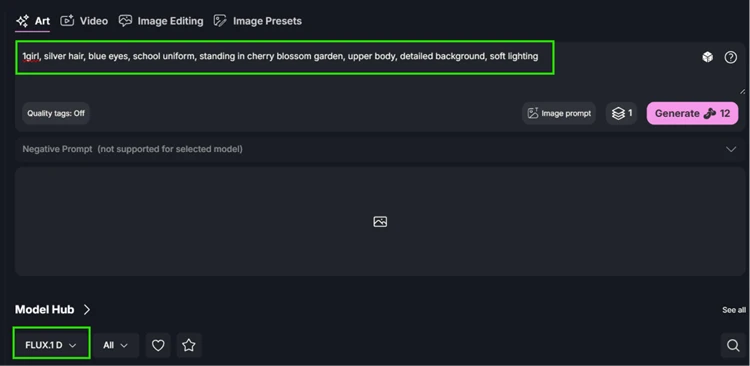
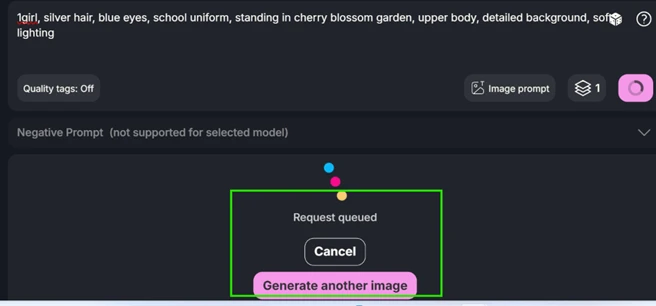
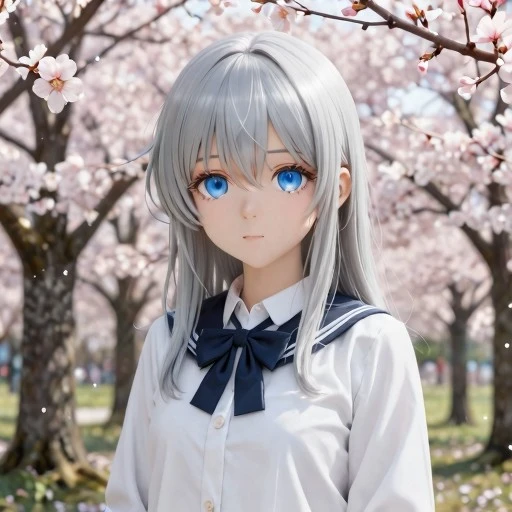
I changed nothing except the model dropdown, switched to FLUX.1 S, kept the identical prompt, and generated again.
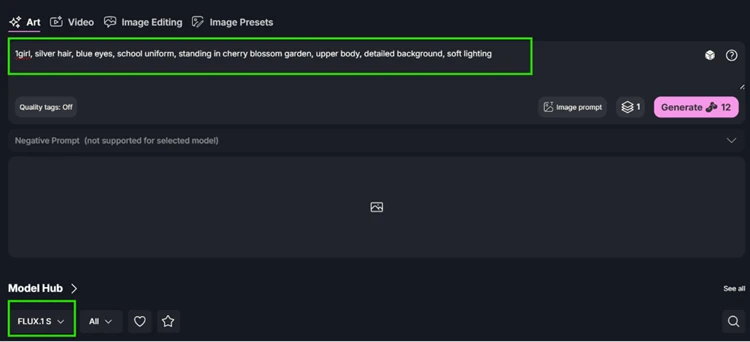
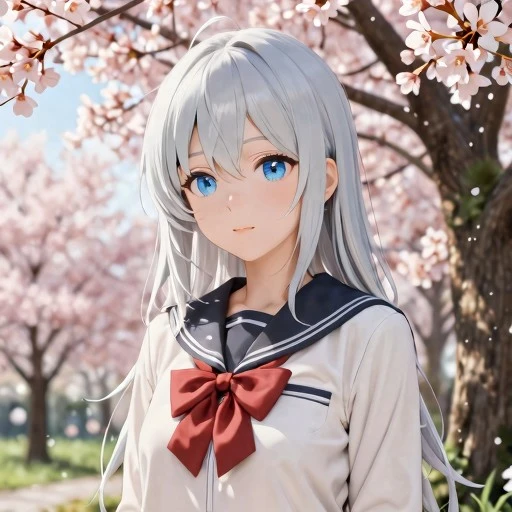
Side by side, the two outputs are close enough to pass as regenerations of the same image rather than output from two separate models. Hair part, pose, expression, and lighting barely shift. The bow color changes and the face softens slightly, and that covers the full list of differences. A library that size should show more separation between two headline models on a plain prompt than this did.
Every post on the Posts feed carries an expandable metadata panel. I opened one to check what it actually exposes.
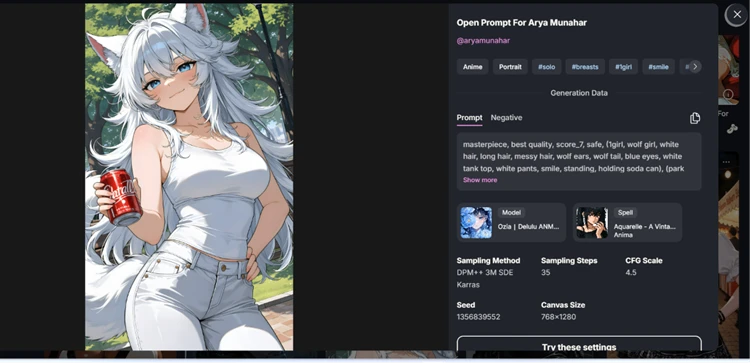
The panel lists the complete prompt, negative prompt, model, spell, sampling method, sampling steps, CFG scale, seed, and canvas size in one place. Copying that data into the generator and running it reproduces something close to the original result. That turns the community feed into a working preset library rather than a passive gallery, which is the single most useful thing I found on the platform.
The character builder in Tavern asks for a title, a chat name, a voice, an optional video, and a full description before anything gets published.
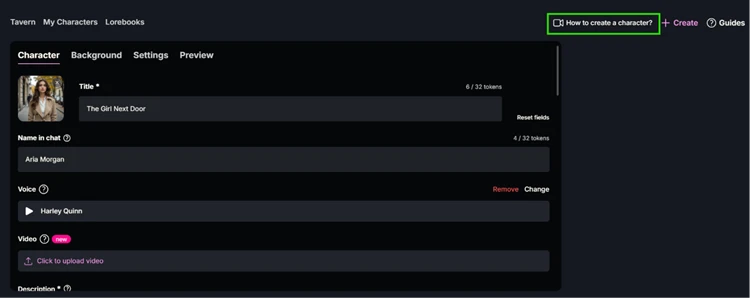
One detail stood out inside the builder itself. A "How to create a character" video guide sits right next to the Create button, so the platform expects first-time users to need it instead of assuming the form explains itself.
The homepage lays out every tool under one account, with no separate sign-up required for any of them.
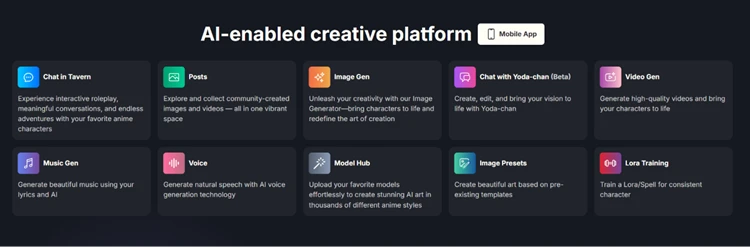
Tavern, Posts, Image Gen, Yoda-chan, Video Gen, Music Gen, Voice, Model Hub, Image Presets, and Lora Training all sit on the same dashboard. Ten tools under one login is the strongest argument for staying on Yodayo instead of switching between separate apps for art, chat, and audio.
I opened a chat with a character named Leon Orlov and planted one fact early, so I'd have something concrete to check later.
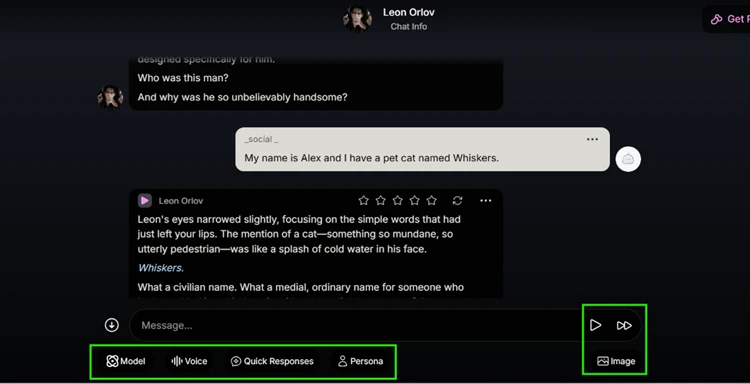
After 20 more messages of unrelated small talk, I opened Chat Settings and checked the Memory tab to see what had actually been retained.
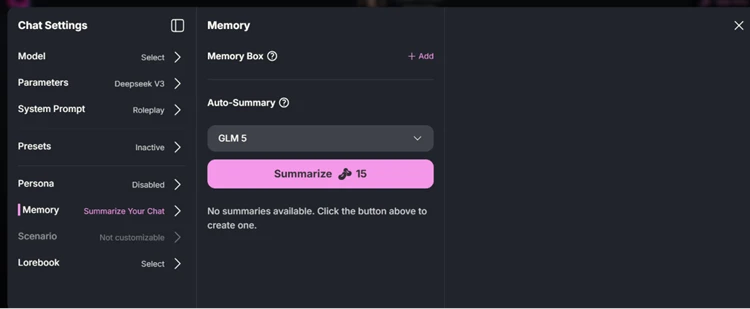
Nothing had been retained automatically. The tab read "No summaries available," and the only way to generate one was to press Summarize, which costs 15 credits and runs through a separate model from the one doing the roleplay. Cross-session memory here is not a background feature. It is a paid action you have to remember to take, and skipping it means every new session starts from a blank slate no matter how much backstory built up before it.
Given how much backlash the August 2025 explicit content ban generated inside the community, I expected the filter to flag anything remotely suggestive. I ran "1girl, swimsuit, beach, sunset, smiling, full body" and it generated without any rejection or warning. On this prompt, at least, the filter left a mild, non-explicit request alone, which cuts against the claim that moderation now catches anything even slightly revealing.
| Dimension | Our test | User signal | Verdict | Composite |
|---|---|---|---|---|
| Image Output Quality Visual fidelity and usefulness | 6.5 | 5.5 | Moderate | |
| NSFW Support Stability Consistency of NSFW availability | 3 | 2 | Weak | |
| Ease of Use Learning curve and usability | 6 | 5 | Weak | |
| Value for Money Perceived fairness of pricing | 3 | 1.5 | Weak | |
| Policy Transparency Clarity of rules and changes | 2.5 | 2 | Weak | |
| Community Trust User confidence and goodwill | 2.5 | 1.5 | Weak |
Toolscopia uses cookies to keep you signed in, remember your preferences, and understand how our reviews get read. Analytics are anonymous. See our privacy policy for the full detail.


Comments 0
Join the discussion and share your perspective.
Sign in to post a comment and reply to other readers.
No comments yet
Be the first to share your perspective on this tool.